3D Genome Mapping Tool to Improve Diagnosis and Treatment of Genetic Diseases
Posted on 11 Nov 2025
Standard laboratory tests often fail to detect complex DNA rearrangements that underlie many genetic diseases. To bridge this diagnostic gap, researchers have developed a 3D chromosome mapping method that can uncover previously hidden structural variants with remarkable precision.
This breakthrough approach, developed by researchers from the University of Washington School of Medicine (Seattle, WA, USA), could redefine the diagnosis and management of genetic disorders. Unlike traditional one-dimensional DNA sequencing, which reads genetic code linearly, the new technique captures the three-dimensional structure of chromosomes inside the nucleus. This spatial mapping, known as genomic proximity mapping (GPM), is based on Hi-C sequencing and reveals how different regions of DNA physically interact. These interactions can expose deletions, duplications, and rearrangements that remain invisible to conventional sequencing technologies.
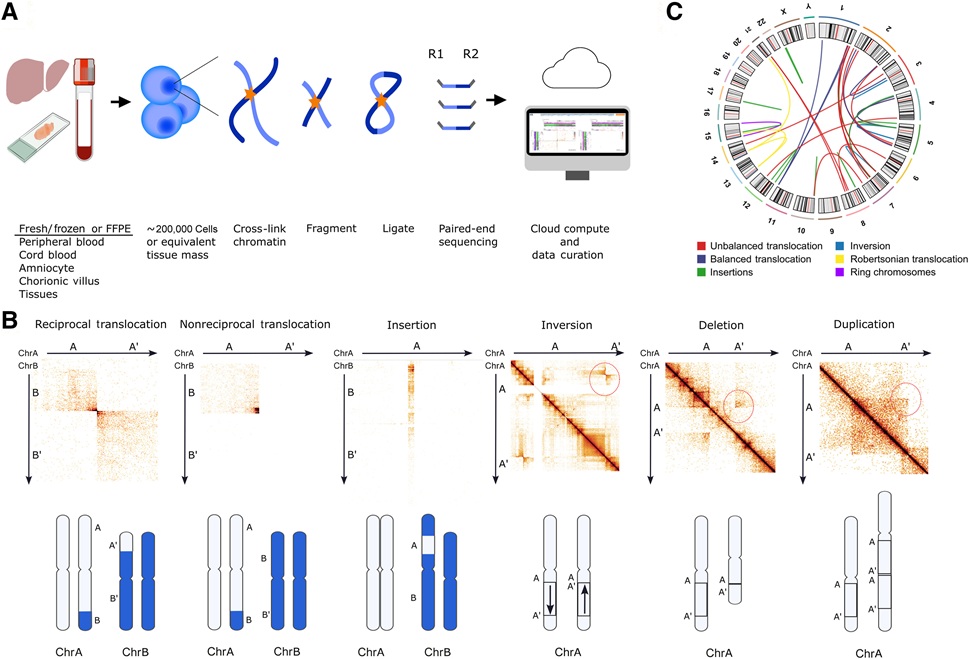
In the study published in The Journal of Molecular Diagnostics (Elsevier), the researchers applied GPM to DNA samples from 123 patients with suspected genetic conditions. The method accurately identified all known large chromosomal variants (110 deletions or duplications and 27 rearrangements) with 100% concordance compared to standard tests. Additionally, GPM uncovered 12 novel structural variants that conventional methods had missed, including cryptic rearrangements and complex multi-chromosomal events.
The technology also detected low-level mosaicism, where different cells in a patient carry different genetic changes—an important capability for accurate diagnosis and prognosis. Moreover, GPM requires less DNA than other advanced techniques such as optical genome mapping (OGM) or long-read sequencing (LRS), making it more practical for use on preserved or low-quality tissue samples.
“GPM offers broad clinical benefits. It enables high-resolution, comprehensive genomic characterization, even from compromised samples such as low-quality or archived preserved tissue,” said co-lead investigator Yajuan J. Liu, PhD. “As genomic medicine moves toward precision diagnostics, this new tool addresses current limitations in genetic testing, improving diagnostics and empowering doctors to provide personalized treatment, tailored monitoring, better prognosis, and improved family counseling.”
Related Links:
University of Washington School of Medicine