AI Tool Detects Hidden Warning Signs of Disease Inside Single Cells
Posted on 13 Oct 2025
Detecting early signs of disease at the cellular level remains a major challenge in medicine. Subtle molecular changes often precede visible symptoms, yet these early indicators are difficult to detect with current technologies. Traditional gene-level analyses often collapse complex genetic information into a single value, thereby masking critical details that could reveal early disease states or inform treatment decisions. A new artificial intelligence (AI) tool now provides a deeper view into cellular activity, capable of revealing hidden disease markers that are invisible to conventional methods.
Developed by researchers at McGill University (Montreal, QC, Canada), the tool—called DOLPHIN—uses AI to analyze RNA expression patterns inside individual cells. It captures fine-grained molecular differences by examining how genes are spliced together from smaller components called exons. Unlike standard approaches that aggregate data at the gene level, DOLPHIN focuses on these smaller building blocks, allowing it to detect molecular variations that can serve as early indicators of disease.
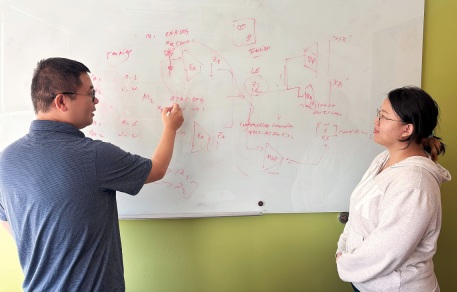
The researchers demonstrated the tool’s effectiveness in a study published in Nature Communications. In one application, DOLPHIN analyzed single-cell data from pancreatic cancer patients and identified over 800 disease markers missed by conventional tools. The AI system distinguished aggressive, high-risk cancers from less severe cases, offering valuable information that could help clinicians personalize treatment strategies and predict disease progression.
In addition to its diagnostic potential, DOLPHIN represents a step toward creating detailed digital models of human cells. By generating richer single-cell profiles, the platform could simulate how cells behave and respond to drugs before moving to laboratory or clinical testing. This approach may accelerate discovery, reduce research costs, and improve the precision of future therapies by enabling virtual experiments.
The researchers plan to expand DOLPHIN’s capabilities to analyze millions of cells across different tissues and diseases. The aim is to refine its algorithms for broader clinical use and to build large-scale virtual cell libraries for modeling complex biological processes. Such advances could transform early disease detection and open new avenues in precision medicine.
“This tool has the potential to help doctors match patients with the therapies most likely to work for them, reducing trial-and-error in treatment,” said Jun Ding, senior author of the study.
Related Links:
McGill University