Generative AI Demonstrates Expert-Level Pathological Assessment of Lung Cancer
Posted on 05 Aug 2025
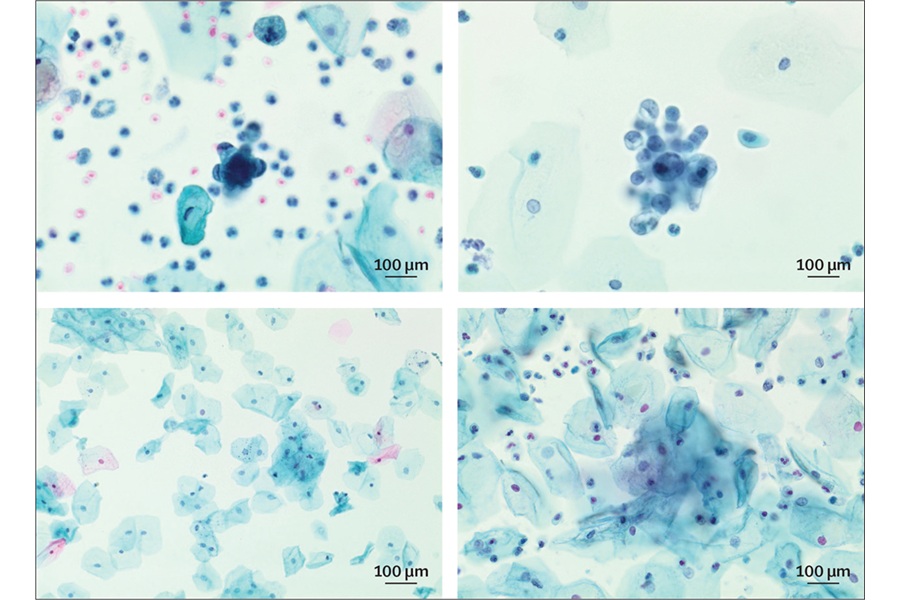
Lung adenocarcinoma is one of the most difficult cancers to diagnose accurately, requiring pathologists to spend extensive time examining tissue samples under microscopes to determine tumor grades and predict outcomes. This manual process often leads to variability in assessments, as different pathologists may interpret subtle histological features differently. These inconsistencies pose a serious challenge in delivering timely, standardized diagnoses. In many parts of the world, access to experienced pathologists is also limited, creating a gap in care quality. Now, a new study has demonstrated how generative artificial intelligence (AI) could overcome these challenges by delivering fast, accurate, and reproducible assessments that rival expert-level performance.
In the study, researchers at Southern Medical University's Zhujiang Hospital (Guangzhou, China) tested three advanced GenAI models—GPT-4o, Claude-3.5-Sonnet, and Gemini-1.5-Pro. They analyzed 310 diagnostic slides from The Cancer Genome Atlas and 182 slides from independent medical institutions to evaluate the performance of these models. The GenAI systems were able to identify cancer patterns and grade tumors with notable accuracy, with Claude-3.5-Sonnet achieving an average of 82.3% accuracy in differentiating between cancer grades. The models operate by extracting key pathological features—such as tumor necrosis, inflammatory responses, and cellular patterns—and quantifying them with precision, transforming subjective visual interpretation into measurable metrics. The researchers went on to develop a sophisticated prognostic model that combines GenAI-extracted pathological features with clinical information, successfully predicting patient outcomes across multiple validation studies. Their model identified 11 key histological features and 4 clinical variables that together provide a comprehensive risk assessment for patients.
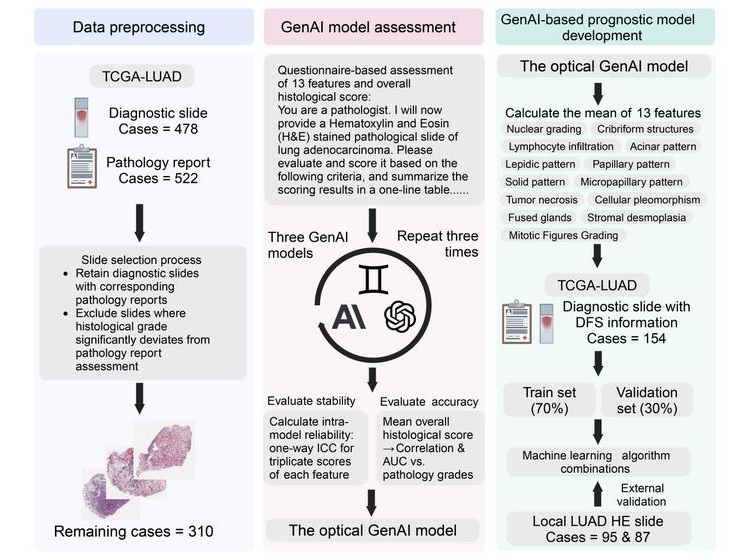
The findings, published in the International Journal of Surgery, confirmed that GenAI-enabled analysis could consistently replicate diagnostic evaluations, even when applied repeatedly to the same tissue samples. The models completed assessments in minutes, offering massive time savings for clinical workflows. They also revealed previously underappreciated prognostic factors—such as interstitial fibrosis, papillary patterns, and lymphocytic infiltration—highlighting the potential of AI to uncover new dimensions of cancer pathology. By providing scalable, consistent, and expert-level diagnostics, the technology promises to democratize access to high-quality care and reshape cancer treatment strategies. Future research will likely explore broader implementation and deeper integration into clinical decision-making systems.