Light Signature Algorithm to Enable Faster and More Precise Medical Diagnoses
Posted on 01 May 2025
Every material or molecule interacts with light in a unique way, creating a distinct pattern, much like a fingerprint. Optical spectroscopy, which involves shining a laser on a material and observing how light interacts with it, is a widely used technique in chemistry, materials science, and medicine. However, interpreting the resulting spectral data can be challenging and time-consuming, especially when the differences between samples are subtle. Now, a new machine learning (ML) algorithm has been developed to effectively interpret the "light signatures" or optical spectra of molecules, materials, and disease biomarkers, offering the potential for faster and more precise medical diagnoses and sample analysis.
The algorithm, known as Peak-Sensitive Elastic-net Logistic Regression (PSE-LR), was developed by researchers at Rice University (Houston, TX, USA) specifically to analyze light-based data. PSE-LR is not only capable of accurately classifying different samples but also offers transparency in its decision-making process, a feature that many advanced ML models typically lack. The algorithm provides a "feature importance map" that highlights the specific parts of the spectrum that contributed to a particular classification decision, making the results easier to interpret, verify, and act upon. In tests comparing PSE-LR to other ML models, it demonstrated superior performance, particularly in identifying subtle or overlapping spectral features.
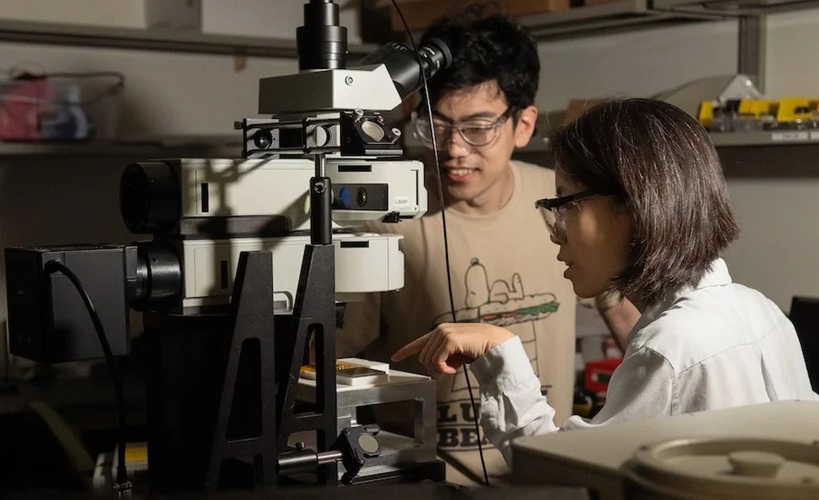
The model also excelled in various real-world tests, including detecting ultralow concentrations of the SARS-CoV-2 spike protein in fluid samples, identifying neuroprotective solutions in mouse brain tissue, classifying Alzheimer’s disease samples, and differentiating between 2D semiconductors. This new algorithm could pave the way for the creation of novel diagnostics, biosensors, or nanodevices. The optical spectra of tissues or other biological samples can provide valuable insights into what is happening within the body. This capability is critical because quicker and more accurate disease detection can lead to improved treatments and potentially save lives. Beyond healthcare, the method can also aid scientists in better understanding new materials, facilitating the development of smarter biosensors and more effective nanodevices.
“Imagine being able to detect early signs of diseases like Alzheimer’s or COVID-19 just by shining a light on a drop of fluid or a tissue sample,” said Ziyang Wang, an electrical and computer engineering doctoral student at Rice who is a first author on a study published in ACS Nano. “Our work makes this possible by teaching computers how to better ‘read’ the signal of light scattered from tiny molecules.”