Hereditary Cancer Test Identifies Deleterious Mutations in Endometrial Cancer
By LabMedica International staff writers
Posted on 05 Apr 2016
Two recent studies have shown that a Hereditary Cancer test can identify deleterious mutations in patients with endometrial cancer and additionally, showed the superior ability of the combined three biomarker test to predict survival in patients with platinum treated ovarian cancer.Posted on 05 Apr 2016
One study carried out by scientists from MD Anderson Cancer Center (Houston, TX, USA) evaluated the prevalence of cancer predisposition gene mutations in 381 endometrial cancer patients who had previously undergone tumor testing to screen for Lynch Syndrome. Patients were tested for mutations in 25 cancer genes using the myRisk Hereditary Cancer test (Myriad Genetics; Salt Lake City, UT, USA).
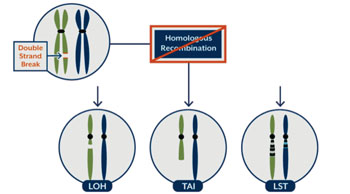
Image: Schematics of the three biomarker myChoice homologous recombination deficiency (HRD) assay (Photo courtesy of Myriad Genetics).
The results showed that 9.2% of endometrial cancer patients had a deleterious mutation, including 5.8% with a mutation in a Lynch Syndrome gene and 3.4% in 10 non-Lynch genes. Multi-gene panel testing with myRisk demonstrated the ability to identify 60% more mutations, several of which are associated with ovarian and uterine cancers. These findings support gene panel testing to identify patients who may be missed by current Lynch Syndrome testing alone.
In another study, from the same institution compared the predictive ability of the combined three biomarker myChoice homologous recombination deficiency (HRD) score to the three independent measures of homologous recombination deficiency that comprise the assay including: loss of heterozygosity (LOH) score, telomeric-allelic imbalance (TAI) score, and large-scale state transitions (LST) score. The results showed that the combined myChoice HRD score predicted progression-free survival and overall survival in patients with platinum-treated ovarian cancer. In a bivariate analysis none of the individual biomarkers (LOH, TAI, and LST) reached statistical significance for either progression free survival or overall survival. In this study, myChoice HRD was shown to be a superior predictor of clinical outcomes to any of the individual score components including LOH, TAI and LST.
Johnathan Lancaster, MD, PhD, chief medical officer, at Myriad Genetic Laboratories, said, “Endometrial cancer is the most frequent gynecologic cancer and a significant number of these cases are due to mutations in hereditary cancer genes. Our new data show that gene panel testing can identify many more patients with harmful mutations than testing Lynch Syndrome genes alone. The additional information provided by the myRisk Hereditary Cancer test will help physicians optimize care for their patients.” The studies were presents at the Society for Gynecologic Oncology annual meeting, held March 19–22, 2016, in San Diego (CA, USA).
Related Links:
MD Anderson Cancer Center
Myriad Genetics




Platinum Member

Automated Coagulation Analyzer
Hemolumi H6


Immunofluorescence Analyzer
IFA System
Gold Member

Nucleic Acid Extractor System
NEOS-96 XT