Pro-neuropeptide Y Identified as Prognostic Biomarker for Aggressive Prostate Cancer
By LabMedica International staff writers
Posted on 07 Feb 2016
Overexpression of pro-neuropeptide Y (pro-NPY) has been identified as a prognostic biomarker for aggressive prostate cancer.Posted on 07 Feb 2016
Pro-NPY is a member of the NPY family. NPY is a secreted protein and is one of the most abundant peptides in the nervous system. NPY can be cleaved into neuropeptide Y and C-flanking peptide of NPY chain, which regulates energy usage, and it is involved in learning, memory processing, and epilepsy. NPY is implicated in the control of feeding and in secretion of gonadotrophin-release hormone. In addition, NPY increases the proportion of energy stored as fat.
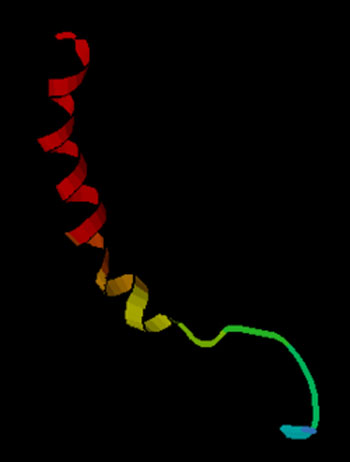
Image: Structure of neuropeptide Y (NPY) (Photo courtesy of Wikimedia Commons).
Investigators at the University of Copenhagen (Denmark) studied cellular processes altered in prostate cancer using system-wide quantitative analysis of changes in protein expression in clinical samples in order to identify prognostic biomarkers for disease aggressiveness.
For this purpose they used mass spectrometry to perform genome-scale quantitative proteomic profiling of 28 prostate tumors and neighboring nonmalignant tissue in eight cases obtained from formalin-fixed paraffin-embedded prostatectomy samples. Two independent cohorts of prostate cancer patients (total of 752 cases) were used for immunohistochemical evaluation of pro-NPY as a prognostic biomarker.
Results revealed that among the 9,000 proteins identified in the study, pro-NPY was found to exhibit high levels in a subgroup of prostate cancer samples. Pro-NPY was found to be overexpressed by at least five-fold in prostate cancer, but this protein was largely absent in other solid tumor types. Overexpression of pro-NPY was associated with an increased risk of prostate cancer-specific mortality.
"Our research shows that high pro-NPY levels are very specific to prostate cancer and can serve to predict prostate cancer related death among diagnosed patients who have not received surgical treatment," said senior author Dr. Amilcar Flores-Morales, professor of molecular disease biology at the University of Copenhagen. "So identifying the biomarker pro-NPY could help us identify patients who would benefit from early active treatment, whereby we would also reduce unnecessary treatment of patients who undergo surgery when they have low-grade tumors that for the most part do not put their lives at risk. In the end, due to side effects, this could prove more harmful than beneficial to patients."
The study was published in the December 2, 2015, online edition of the journal European Urology.
Related Links:
University of Copenhagen




Platinum Member

Automated Coagulation Analyzer
Hemolumi H6

Gold Member

POC Helicobacter Pylori Test Kit
Hepy Urease Test
New

MR-proADM Test
B•R•A•H•M•S MR-proADM KRYPTOR test
New

Fully Automated Urinalysis System
DxU 1800 Fully Automated Urinalysis System