Direct Mailing Improves Screening for Colorectal Cancer
By LabMedica International staff writers
Posted on 26 Sep 2012
Direct mailing of fecal occult blood test (FOBT) kits to patients eligible for colorectal cancer screening appears to be efficacious for improving screening.Posted on 26 Sep 2012
Appropriate screening and early detection can greatly reduce colorectal cancer, associated morbidity and mortality, and several national guidelines recommend regular screening for colorectal cancer among adults aged 50 years and older with high-sensitivity FOBT, sigmoidoscopy, or colonoscopy.
Scientists at Northwestern University (Chicago, IL, USA) conducted an outreach intervention program especially designed to patients who were overdue for colorectal cancer screening and were receiving care at a community health center that serves a primarily low-income population with a high proportion of immigrants and refugees. The patients were sent an FOBT kit with instructions on how to use it.
A total of 317 patients aged 50 to 80 years had at least two visits to the study site between July 1, 2008, and December 31, 2009, and were eligible for the colorectal cancer screening measure. In all, 98 patients were randomized to the usual care group and 104 were randomized to the outreach intervention. The patients were racially and ethnically diverse, more than one-half of patients were women, and the vast majority was uninsured or publicly insured.
The main outcome of the study was 30% of patients assigned to the outreach intervention and 5% of patients assigned to the usual care group completed colorectal cancer screening between January 1, 2010, and June 30, 2010. Almost all of the completed colorectal cancer screening tests were the three-sample guaiac-based FOBT, the Hemoccult II SENSA Elite kits (Beckman Coulter, Brea, CA, USA).
The authors concluded that the direct-to-patient outreach intervention was effective even in a health care setting that had already implemented point-of-care clinician-directed electronic clinical reminders to promote appropriate colorectal cancer screening. This finding is especially important given the marked disparities in colorectal screening among racial and ethnic minorities, individuals with lower income and educational attainment, the uninsured, and individuals born outside the USA. The study was published in the September/October 2012 issue of the Annals of Family Medicine.
Related Links:
Northwestern University
Beckman Coulter




Platinum Member

Automated Coagulation Analyzer
Hemolumi H6

Gold Member

Aspiration System
VACUSAFE
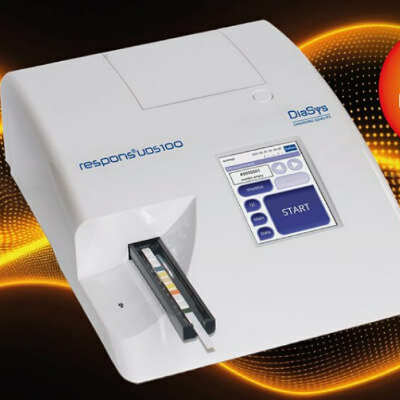
Urine Analyzer
respons® UDS100


Automated Clinical Chemistry Analyzer
Envoy 500+