Advanced Blood Test Detects and Analyzes Circulating Tumor Cells
By LabMedica International staff writers
Posted on 13 Feb 2012
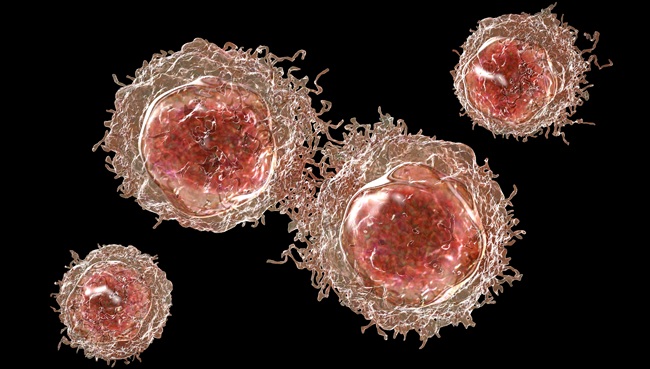
An advanced blood test detects and analyzes circulating tumor cells (CTCs) from cancer patients.Posted on 13 Feb 2012
The new test, called high definition CTC (HD-CTC), labels cells in a patient's blood sample in a way that distinguishes possible CTCs from ordinary red and white blood cells. A digital microscope and an image-processing algorithm are used to isolate the suspect cells with sizes and shapes (morphologies) unlike those of healthy cells. A pathologist can examine the images of the suspected CTCs to eliminate false positives and note their morphologies.
Scientists from The Scripps Research Institute (TSRI; La Jolla, CA, USA), Scripps Health, and collaborating cancer physicians successfully demonstrated the effectiveness of the blood test. Five new studies resulted from the collaboration and demonstrated the new test's accuracy and effectiveness for a number of different cancer types. The studies also began to explore the utility of the technology for diagnosing and monitoring patients and improving cancer research in the lab.
"It is a next-generation technology," said Scripps' Associate Prof. Peter Kuhn, PhD, senior investigator of the new studies and primary inventor of the high-definition blood test. "It significantly boosts our ability to monitor, predict, and understand cancer progression, including metastasis, which is the major cause of death for cancer patients."
Whereas other tests for CTCs typically use enrichment steps in which suspected CTCs are concentrated--methods that can inadvertently exclude some types of CTCs--the new studies show HD-CTC works well as a no-cell-left-behind process and enables a more complete analysis.
Prof. Kuhn emphasized that the basic setup can be easily modified with different cell-labeling and image-processing techniques. He and his colleagues will study the use of HD-CTC as a potential screening test and develop it further for use in clinical monitoring and cancer research. Prof. Kuhn has founded a San Diego-based biotechnology company, Epic Sciences, Inc. (CA, USA) to develop HD-CTC commercially for companion diagnostic products in personalized cancer care.
The studies were published in the February 2012 edition of the journal Physical Biology.
Related Links:
The Scripps Research Institute
Epic Sciences




Platinum Member

Automated Coagulation Analyzer
Hemolumi H6
.jpg)
Gold Member

Clinical Chemistry Assay
Sorbitol Dehydrogenase (SDH)

Gold Member

Blood-Based Protein Biomarker Solution for Alzheimer's Disease
BG-DTi2000.


Thyroid Test
Anti-Thyroid EIA Test