Newly Certified FISH Probes Support Cytogenetic Testing in Blood Cancers
Posted on 05 Nov 2026
Hematological malignancies such as non-Hodgkin lymphoma, acute lymphoblastic leukemia, chronic lymphoid leukemia, and multiple myeloma require assessment of key cytogenetic abnormalities. Clinical laboratories must also meet increasingly stringent regulatory requirements while maintaining efficient testing workflows. A newly launched set of certified fluorescence in situ hybridization probes now supports evaluation across these hematological cancers.
OGT (Oxford, UK), a Sysmex Group company, has launched four newly certified CytoCell fluorescence in situ hybridization (FISH) probes under the European Union’s In Vitro Diagnostic Regulation (IVDR). The launch forms part of the ongoing transition of the CytoCell FISH portfolio from CE marking under the In Vitro Diagnostic Directive (IVDD) to IVDR certification ahead of the Class C deadline of December 31, 2028.
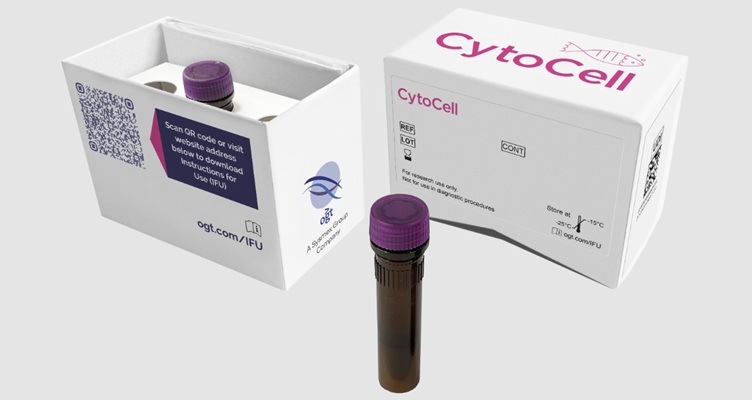
The newly certified products are the CytoCell ATM Deletion FISH Probe [CE-LPH 011], CytoCell IGH Plus Breakapart FISH Probe [CE-LPH 070], CytoCell IGH/FGFR3 Plus Translocation, Dual Fusion FISH Probe [CE-LPH 074], and CytoCell IGH/MYEOV Plus Translocation, Dual Fusion FISH Probe [CE-LPH 078]. All four probes were previously available within the CytoCell IVDD portfolio and have now completed the transition to IVDR certification.
The probes enable clinical laboratories to assess key disease-associated cytogenetic abnormalities, including those involving IGH or ATM. This supports disease characterization across a range of hematological malignancies. The probes are designed to support efficient laboratory workflows, with reliable hybridization performance supporting reproducible results and clear, well-defined signal patterns facilitating interpretation and reporting.
The transition is intended to help laboratories maintain access to familiar probes while supporting compliance and movement toward IVDR-compliant workflows. OGT also provides rapid on-site and digital support from clinical specialists with first-hand laboratory experience to assist laboratories with validation, revalidation, implementation and use of IVDR-certified probes. CytoCell IVDR-certified FISH Probe Kits are for in vitro diagnostic use, for laboratory professional use only and are not intended for use as a stand-alone diagnostic.
“Clinical laboratories are balancing increasing regulatory requirements with the need to maintain efficient, high-quality testing workflows,” said Tori Anthony-Dubernet, Director of European Sales and Support at OGT.
“We’re very happy to be expanding our IVDR-certified CytoCell portfolio with these important FISH probes and to help laboratories transition to IVDR with confidence. Combined with the support of our experienced FISH specialists, customers are able to access expert guidance throughout every stage of the transition journey,” added Anthony-Dubernet.
Related Links
OGT