Project to Develop Maternal Blood Test for Rapid Fetal Oxygen Deprivation Detection
Posted on 10 Sep 2026
Intrapartum fetal hypoxia remains difficult to assess with existing monitoring, leaving clinicians to make time-critical decisions with incomplete data. Limited detection and interpretation can contribute to missed fetal distress, preventable birth injuries, and avoidable cesarean deliveries. To provide clearer physiologic insight during labor, a new project aims to noninvasively quantify molecular signals of fetal oxygenation and improve clinical decision-making.
The Wyss Institute at Harvard University has received a contract of up to USD 12 million from the Advanced Research Projects Agency for Health’s Making Obstetrics Care Smart (MOCS) program to develop the Fetal Extracellular Vesicle Monitoring of Oxygenation (FEMOx) technology. FEMOx is designed as a molecular diagnostic that quantifies small, stable RNA species known as microRNAs (miRNAs) whose expression levels change with the degree of fetal oxygen deprivation. The approach targets extracellular vesicles (EVs) present in maternal blood as an accessible window into fetal and placental physiology during labor.
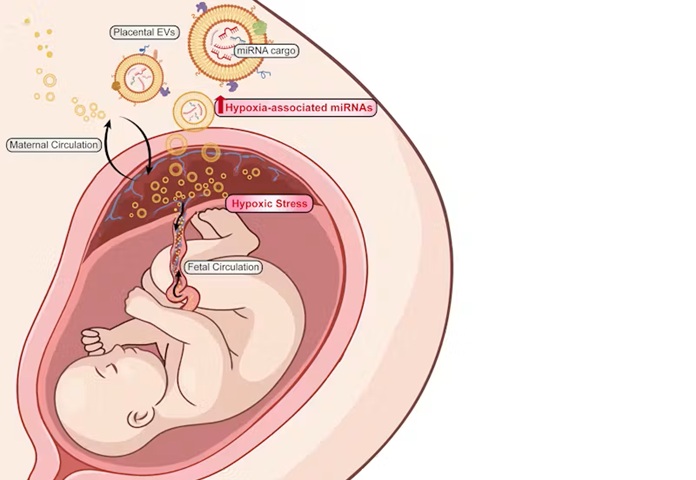
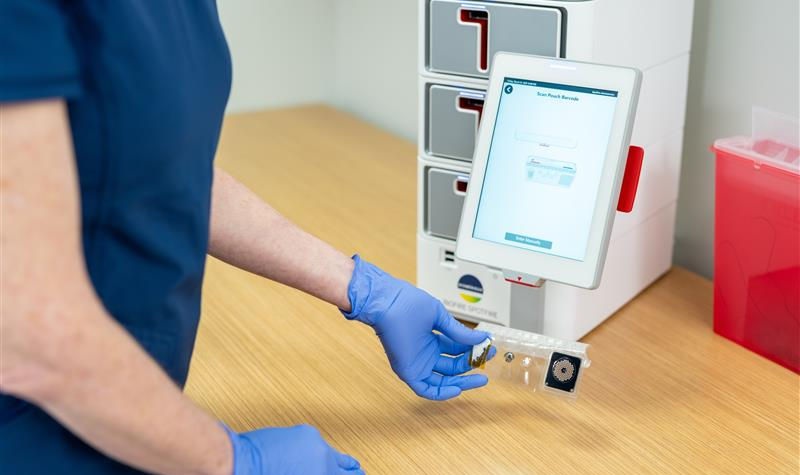
The workflow integrates multiple innovations into a unified platform. A maternal whole‑blood sample is introduced into a multilayer microfluidic chip that first isolates cell‑free plasma and then enriches placental EVs using integrated high‑affinity antibody arrays. On‑chip, an ambient nucleic acid molecular sensing process employs a cell‑free sensor technology, INSPECTR, to translate hypoxia‑associated miRNAs into bioluminescent signals. The signal pattern is envisioned to be read by a portable point‑of‑care detector and analyzed via a cloud‑based machine‑learning algorithm to yield clinically relevant values for risk stratification during labor.
The project assembles cross‑disciplinary teams spanning technology development and clinical practice. Clinical collaborators from Massachusetts General Hospital and Brigham and Women’s Hospital will provide regular end‑user feedback as the team builds and prototypes a diagnostic device. The effort will align with success‑driven MOCS guidelines, engage stakeholders such as regulatory professionals, industry partners, and payers, and collaborate with other MOCS awardees to address this unmet obstetric challenge.
“Clinicians are often forced to make critical decisions with unreliable information, leading to unnecessary cesarean deliveries, missed fetal distress, and preventable birth injuries with sometimes lifelong consequences[…] Technologies developed across multiple Wyss faculty labs uniquely position the Institute to make rapid detection of fetal oxygen deprivation during labor a clinical reality,” said Peter Nguyen, Ph.D., Wyss Senior Scientist.
“In the FEMOx project, we will capitalize on several recently developed Wyss technologies that enable us to isolate and concentrate tiny so‑called extracellular vesicles (EVs) from maternal blood samples and determine hypoxia‑associated molecular signatures in them. EVs are released by virtually all cells in the body and found in biofluids such as blood, and they carry cargo, including miRNA molecules, from their cells of origin. In fact, about 10 to 15% of EVs in maternal blood are derived from fetal tissues and the placenta, which provide a window into feto‑maternal communication, including the flow of oxygen,” stated Sandy Elmehrath, Ph.D., Wyss Scientist.
Related Links
The Wyss Institute at Harvard University