Liquid Biopsy Combines Multiple Signals for Cancer Detection in a Single Analysis
Posted on 13 Aug 2026
Detecting and monitoring cancer often requires repeated tissue biopsies, which are invasive and not always feasible. Liquid biopsy offers a less invasive way to track disease over time, but many assays focus on individual molecular changes and provide only a partial view of tumor biology. New findings demonstrate an approach that combines multiple blood-based signals in a single analysis for a more comprehensive assessment.
Karolinska Institutet researchers introduce a framework termed multifeature sequencing-based liquid biopsy (MSLB), outlined in a study published in Genome Medicine on August 1, 2026, which consolidates diverse tumor-derived information from a single blood draw for detection and longitudinal monitoring. Rather than focusing on one alteration linked to cancer, the approach integrates multiple, complementary signals to produce a broader picture of tumor characteristics. The concept is presented as a synthesis of evidence from a growing number of studies in the field.
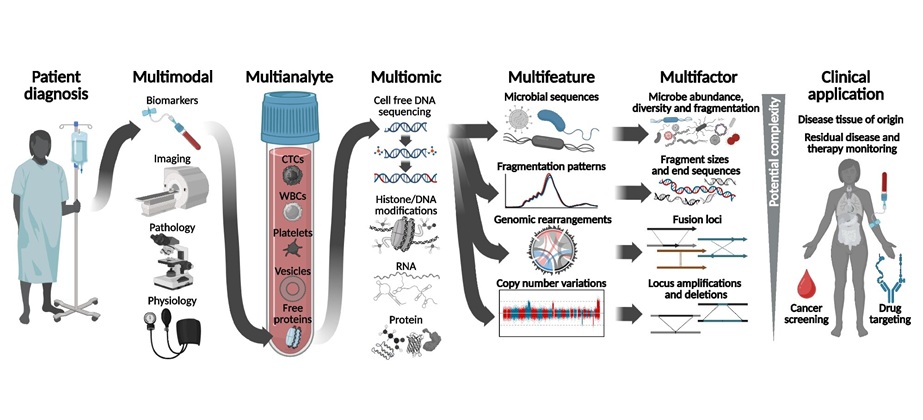
The MSLB concept aggregates signals originating from free DNA and RNA in blood, structural alterations in the genome, and chemical markers. Examples highlighted include combining DNA methylation patterns with fragment-size profiles and chromosomal changes to enable earlier detection across several cancer types. Because these assays generate high-dimensional datasets, advanced bioinformatics methods and machine learning are used to interpret and integrate the results.
According to the authors, current evidence often comes from limited patient groups, underscoring the need for larger prospective studies to validate performance. The methods remain technically complex, and common standards for execution and quality assurance across healthcare centers have not yet been established. The researchers consider initial clinical applications most likely in monitoring cancer patients, assessing treatment effects, and situations where repeated tissue sampling is difficult; over time, they suggest the approach could support a more integrated, dynamic view of cancer development from a simple blood sample.
“By analyzing several biological signals simultaneously from the same blood sample, we can potentially gain a more complete picture of the biology of cancer than by studying each signal separately,” said Mariano A. Molina Beitia, researcher at the Department of Laboratory Medicine, Karolinska Institutet.
“For the technology to be widely used in health care, standardized workflows, independent validation and studies demonstrating the benefits of the analyses for patients are needed,” said Daniel Hagey at the Department of Laboratory Medicine and senior researcher in the study.
Related Links
Karolinska Institutet