Genetic Analysis Identifies BRCA-Linked Risks Across Multiple Cancers
Posted on 16 Apr 2026
Pathogenic variants in BRCA1 and BRCA2 are well established drivers of hereditary breast and ovarian cancer, and have also been linked to pancreatic and prostate cancers. For many less common malignancies, however, their contribution remains poorly characterized, complicating risk assessment and management. These gaps are especially consequential for cancers with limited treatment options and poor prognoses. New research findings now show additional BRCA-associated risks spanning thyroid, bladder, skin, and head and neck cancers.
Researchers at the RIKEN Center for Integrative Medical Sciences (IMS) in Japan led an international case-control analysis to test whether BRCA-associated risk extends beyond the cancers already known. The research, published in ESMO Open in April 2026, analyzed pathogenic variants in BRCA1 and BRCA2 across patient cohorts drawn from BioBank Japan. The work aimed to determine whether BRCA-based approaches to personalized medicine could apply to additional, less common cancer types.
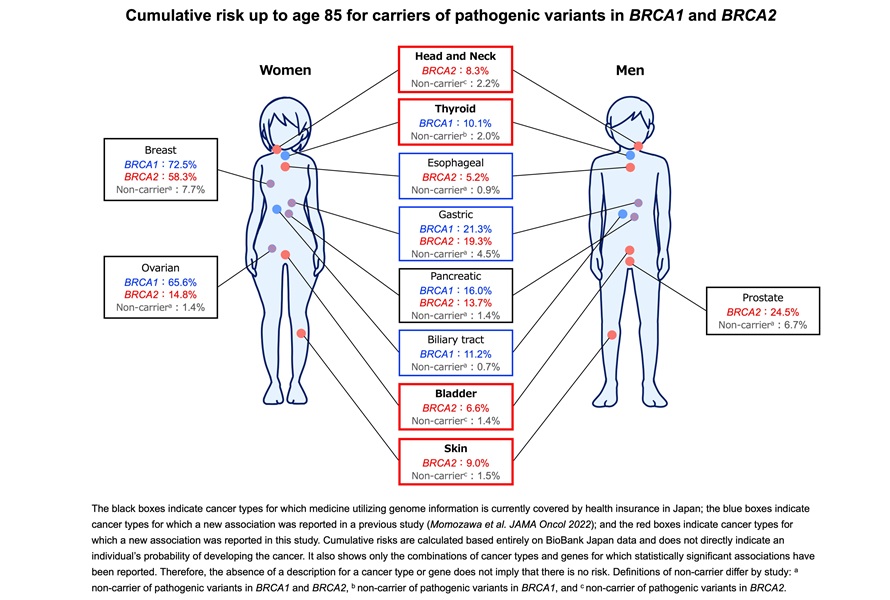
The team examined 3,489 patients with nine cancers not previously evaluated for BRCA links—bladder, bone, brain, head and neck, sarcoma, skin, testis, thyroid, and ureteral cancer—and compared them with 38,842 cancer-free individuals from the same database. BioBank Japan is a multi-institutional, hospital-based registry of blood samples collected nationwide between 2003 and 2018. By contrasting variant carriage between cases and controls, the study evaluated whether pathogenic BRCA1/2 variants were enriched among affected patients.
The analysis associated pathogenic BRCA1 variants with increased thyroid cancer risk. Pathogenic BRCA2 variants were linked to elevated risk of bladder, head and neck, and skin cancers. For bladder cancer, the impact of BRCA2 pathogenic variants on risk was greater in women than in men.
According to the investigators, these findings expand the potential for personalized medicine to cancer types that currently face limited treatment choices and unfavorable outcomes. While the study does not support immediate recommendations for active surveillance in these cancers, the authors state that the results could inform future personalized-medicine guidelines. Related work from the group has previously identified additional BRCA-related cancers (JAMA Oncology, 2022) and examined genome–environment interactions (New England Journal of Medicine, 2023).
Related Links
RIKEN Center for Integrative Medical Sciences