Cancer Mutation ‘Fingerprints’ to Improve Prediction of Immunotherapy Response
Posted on 06 Mar 2026
Cancer cells accumulate thousands of genetic mutations, but not all mutations affect tumors in the same way. Some make cancer cells more visible to the immune system, while others allow tumors to evade immune detection. Understanding how these mutations influence immune recognition is increasingly important for predicting which patients may benefit from immunotherapy. Researchers have now identified five dominant mutation patterns in cancer proteins that help determine how effectively the immune system can detect tumors.
Researchers from the HUN-REN Szeged Biological Research Centre (Szeged, Hungary) and the Hungarian Centre of Excellence for Molecular Medicine (HCEMM, Szeged, Hungary) analyzed nearly 9,300 cancer genomes from multiple cancer types to investigate how DNA mutations alter protein structures in tumors. When DNA is damaged by environmental factors such as ultraviolet radiation or tobacco smoke, or by internal replication errors, the resulting mutations can change amino acids—the building blocks of proteins. These changes can produce abnormal protein fragments known as neoantigens that the immune system may recognize as foreign.
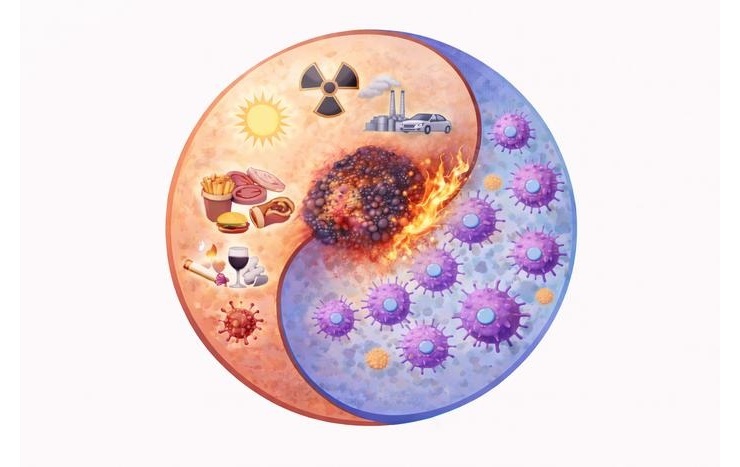
The analysis revealed that most tumors are dominated by one of five recurring amino acid substitution signatures. These patterns represent distinct molecular fingerprints of how mutations alter proteins within cancer cells. Importantly, the substitution signatures also influence immune recognition. Some mutation patterns generate neoantigens that strongly activate immune responses, making tumors more visible to immune cells. Others produce weaker neoantigens, creating “cold” tumors that are harder for the immune system to detect.
The study also found that tumors dominated by a mutation pattern linked to DNA repair defects and chemical exposures often respond poorly to immune checkpoint inhibitor therapies, even when the tumors contain many mutations. The findings, published in Molecular Systems Biology, suggest that simply counting the number of mutations in a tumor may not be sufficient to predict response to immunotherapy. Instead, the specific protein-level effects of mutations may play a critical role in determining whether the immune system can recognize cancer cells.
Researchers also observed that certain immune system genes, particularly specific HLA class I variants, may improve the ability of immune cells to detect mutated tumor proteins. This means the same tumor could appear more visible to the immune system in one patient than in another. These insights may support the development of more personalized immunotherapy strategies that combine tumor genomic analysis with information about a patient’s immune genetics.
“Tumor visibility to the immune system is not determined by mutation numbers alone, but also by the protein-level patterns those mutations create,” said Dr. Máté Manczinger, senior author of the study. “These findings support a new framework for truly personalized immunotherapy, integrating tumor genomics with the patient’s immunogenetic background.”
Related Links:
HUN-REN Szeged BR
HCEMM