Blood Metabolite Signature Test Better Predicts Type 2 Diabetes Risk
Posted on 20 Jan 2026
Type 2 diabetes is rising worldwide and now accounts for more than 90% of all diabetes cases, driven by impaired insulin response and long-term metabolic dysfunction. The disease often develops silently over many years, making early risk identification difficult using standard clinical measures alone. Genetic susceptibility and lifestyle factors such as diet, obesity, and physical inactivity are known contributors, but the biological pathways linking them to disease onset remain unclear. A large international study now shows that specific blood metabolites can signal future type 2 diabetes risk years in advance.
In the study led by Mass General Brigham (Boston, MA, USA), in collaboration with Albert Einstein College of Medicine (Bronx, NY, USA), researchers conducted a large-scale metabolomics analysis to examine small molecules produced during metabolism that circulate in the blood. These metabolites were studied alongside genetic, dietary, and lifestyle data to understand how they influence long-term diabetes risk and interact with known behavioral factors.
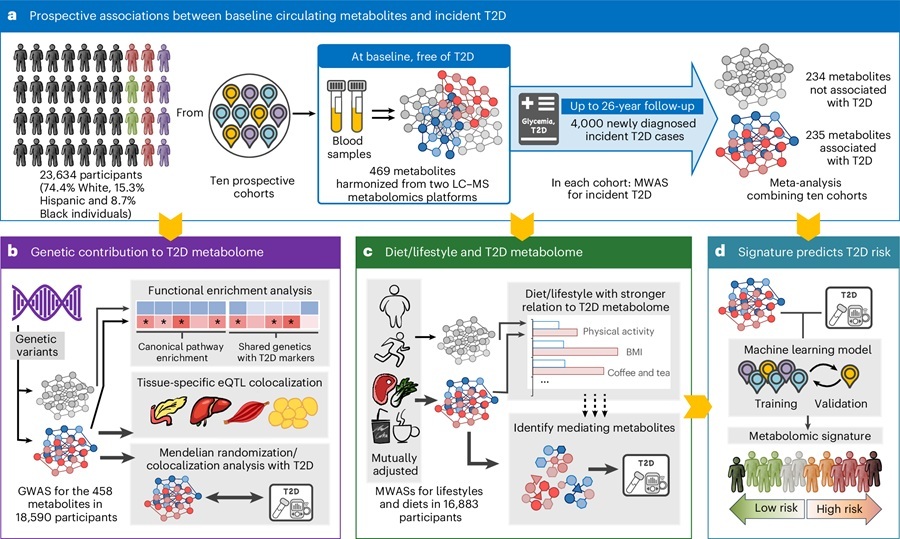
The study followed 23,634 adults from diverse ethnic backgrounds across 10 prospective cohorts, with follow-up periods of up to 26 years. All participants were free of type 2 diabetes at baseline. Blood samples were analyzed for 469 metabolites, and these data were integrated with genetic information and detailed records of diet, physical activity, and other lifestyle factors to assess their relationship with future disease development.
The findings, published in Nature Medicine, revealed that 235 metabolites were significantly associated with either increased or decreased risk of developing type 2 diabetes, including 67 previously unreported markers. Many of these metabolites were strongly influenced by modifiable lifestyle factors such as obesity, physical activity, and intake of red meat, vegetables, sugary beverages, coffee, and tea.
The researchers also identified genetic links between diabetes-associated metabolites and disease-relevant tissues and clinical traits. Using these data, they developed a metabolomic signature composed of 44 metabolites that improved the prediction of future type 2 diabetes beyond traditional risk factors. The team plans to investigate further how different biological pathways contribute to diabetes development, enabling more precise and individualized prevention strategies.
“Our study is the largest and most comprehensive investigation of blood metabolic profiles associated with the risk of type 2 diabetes that integrates genomic and diet and lifestyle data from a wide range of people, and lays important groundwork for future studies,” said senior and co-corresponding author Qibin Qi, PhD.
Related Links:
Mass General Brigham
Albert Einstein College of Medicine





.jpg)