Blood-Based Colorectal Cancer Test Demonstrates High Sensitivity
Posted on 15 Jan 2026
Colorectal cancer (CRC) remains a leading cause of cancer-related death worldwide, largely because many cases are detected at a late stage. While screening can reduce mortality, existing methods are invasive, inconvenient, or have limited sensitivity for early disease and advanced precancerous lesions. A blood-based approach that reliably detects cancer earlier could significantly improve screening uptake and outcomes. New clinical data now show improved performance of a blood test designed to identify CRC and high-risk precancerous changes with greater accuracy.
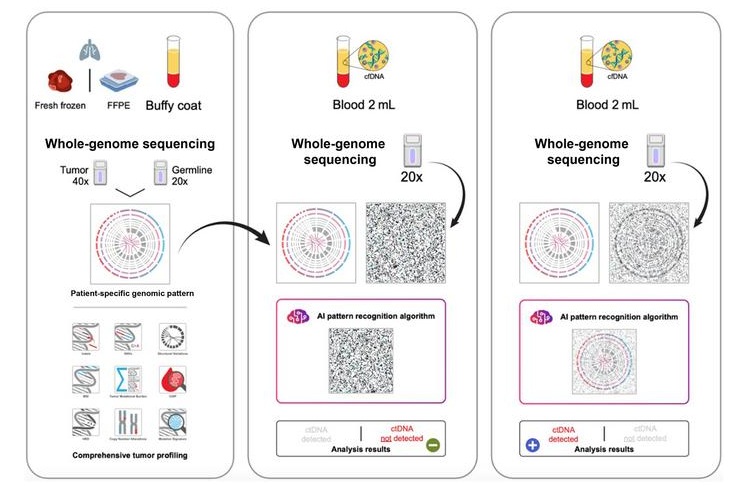
Freenome, South San Francisco, CA, USA) has updated its SimpleScreen CRC test, which is built on the company’s multiomics platform that analyzes multiple biomarker classes, including genomics, epigenomics, and proteomics. The assay applies an AI and machine learning model to detect tumor-derived methylation signatures in circulating cell-free DNA at single-base resolution. Recent updates optimized reagents, workflow, and automation to enhance analytical sensitivity and consistency.

Clinical performance data were generated from the PREEMPT CRC Study using a head-to-head comparison of the original and updated tests on the same patient samples. In 966 samples from an average-risk population, the updated test detected 85% of colorectal cancer cases and 22% of advanced precancerous lesions at 90% specificity. Sensitivity for advanced precancerous lesions with high-grade dysplasia increased to 44%, alongside a 2.6-fold reduction in the limit of detection. The findings, presented at the ASCO Gastrointestinal Cancers Symposium, demonstrate measurable gains over the prior version of the assay.
Modeling based on the updated test performance projected a 9% reduction in lifetime CRC cases and a 10% reduction in CRC-related deaths, highlighting its potential population-level impact. The test is intended for average-risk screening and could offer a less invasive alternative that improves early detection and participation. Freenome plans further refinement of its AI and machine learning algorithms and will pursue additional large-scale validation. A supplemental FDA Premarket Approval application is planned following approval of the initial test and completion of further clinical studies.
“As we look ahead to 2026 and the planned launch of multiple blood-based cancer screening tests, we are confident in our potential to systematically improve the detection of cancer at its earliest, most treatable stages,” said Aaron Elliott, PhD, Chief Executive Officer, Freenome.
Related Links:
Freenome