New 15-Minute Hepatitis C Test Paves Way for Same-Day Treatment
Posted on 20 Dec 2025
Chronic hepatitis C infection affects an estimated 50 million people worldwide and causes around 242,000 deaths each year, largely due to cirrhosis and liver cancer. Although the infection is curable with medication, many patients never begin treatment because diagnosis is slow, costly, or requires multiple clinic visits. Delays between testing and results often lead to loss to follow-up, allowing disease progression. A rapid blood-based test now enables same-day detection of active infection, allowing treatment to begin before patients leave their appointment.
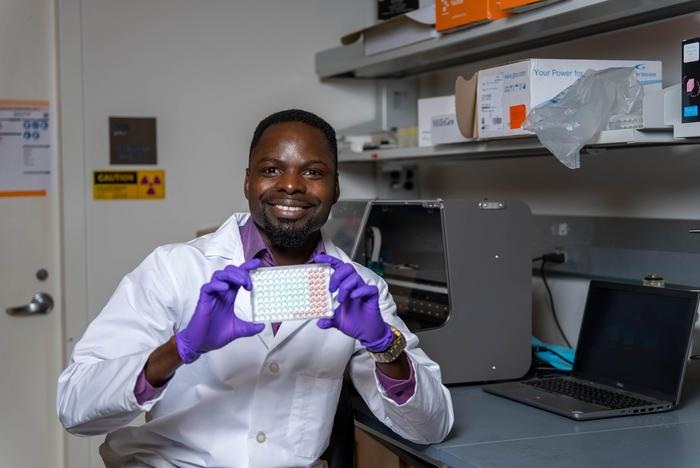
The test, developed through a collaboration between engineering and infectious disease researchers at Northwestern University (Evanston, IL, USA), is built on Nuclein's (Austin, TX, USA) DASH PCR platform, a system created for rapid COVID-19 detection and adapted for hepatitis C. Unlike most hepatitis C PCR tests that require centralized laboratories, this assay works directly from whole blood at the point of care. It delivers highly accurate results in just 15 minutes, making it significantly faster than existing rapid HCV diagnostic options.
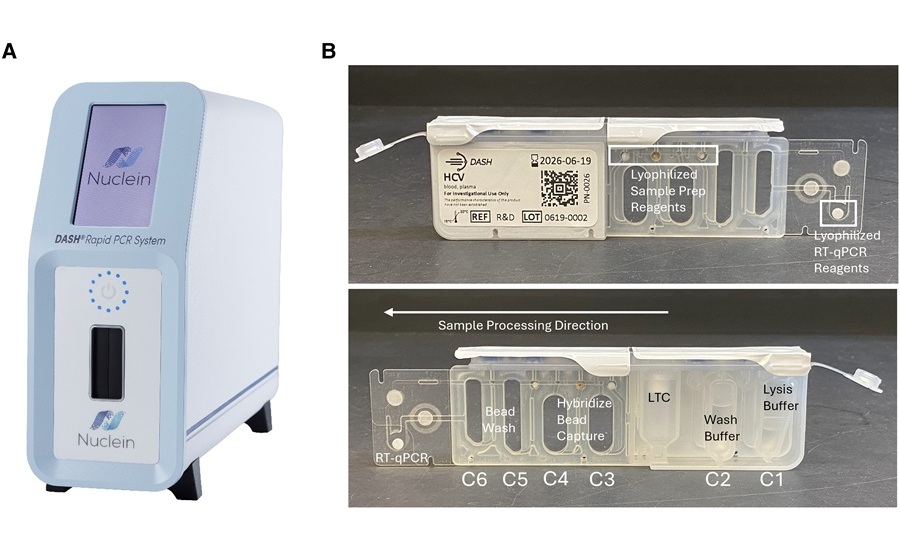
Hepatitis C diagnosis typically involves two steps: an antibody test to confirm exposure, followed by a PCR test to detect active viral infection. In standard practice, PCR samples are sent to external laboratories, delaying results by days or weeks. Even the only FDA-approved point-of-care HCV PCR test currently available requires 40 to 60 minutes, longer than many clinical visits. The new test streamlines this process by combining speed, accuracy, and portability, enabling clinicians to confirm active infection during a single visit and immediately initiate treatment.
To validate the test’s performance, 97 clinical specimens were independently tested using DASH analyzers and the hepatitis C cartridges. The results showed 100% agreement with established commercial diagnostic platforms. In findings published in The Journal of Infectious Diseases, the test demonstrated excellent analytical and clinical performance, confirming its reliability for detecting active hepatitis C infection directly from blood samples.
Same-day diagnosis could significantly increase treatment uptake, reduce disease transmission, and prevent severe liver complications. The test may also play a key role in advancing the World Health Organization’s goal of eliminating hepatitis C as a public health threat by 2030. By simplifying testing pathways and reducing diagnostic delays, the platform could be especially impactful in low-resource settings where access to laboratory infrastructure is limited.
“This test could revolutionize HCV care in the U.S. and globally by dramatically improving diagnosis, accelerating treatment uptake and enabling more people to be cured faster,” said study co-author Dr. Claudia Hawkins. “By reducing delays and simplifying testing pathways, it has the potential to save millions of lives from the devastating liver-related complications of untreated HCV."
Related Links:
Northwestern University
Nuclein