New Serum Marker-Editing Strategy to Improve Diagnosis of Neurological Diseases
Posted on 10 Dec 2025
Tracking gene-expression changes in the brain is crucial for understanding neurological diseases, yet current monitoring tools are invasive or unable to capture subtle activity shifts over time. One emerging alternative is the use of engineered serum markers—small proteins released by targeted brain cells into the bloodstream, where they can be measured with a simple blood test. These released markers of activity can sensitively track brain activity, but their long persistence in blood often obscures rapid or intervening biological changes. Now, researchers have developed a modified approach that clears older signals so new ones can be detected, enabling diagnosis of neurological diseases through a blood test.
Researchers at Rice University (Houston, Texas, USA) have developed a next-generation serum marker system designed to be erasable inside the bloodstream. In this technique, RMAs are engineered to be cleaved by a specific enzyme once they have served their purpose. When the enzyme is introduced, it cuts the marker apart, allowing the previous biological signal to disappear and enabling researchers to record new activity. This concept transforms the use of serum markers by allowing their behavior to be dynamically controlled in the body, rather than extracted and interpreted in a fixed state.
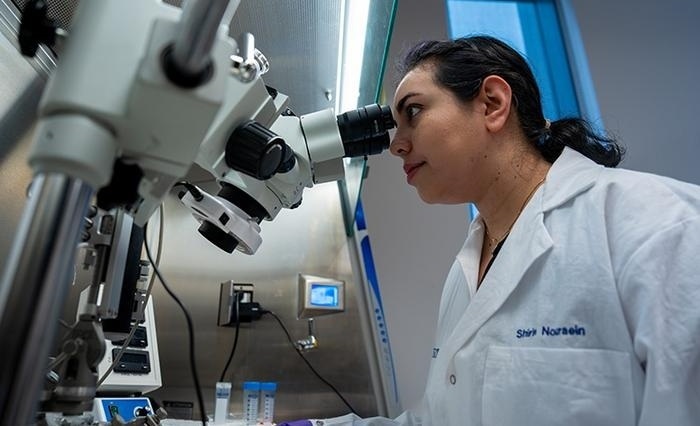
In an animal model, a single injection of the cleaving enzyme eliminated about 90% of the RMA background signal within 30 minutes, making it possible to detect subtle gene-expression changes that had previously gone unnoticed. The team also showed that markers could be repeatedly cleared and remeasured, offering a more detailed picture of how gene activity evolves over time. This level of temporal precision opens the door to monitoring how patients respond to therapy or how neurological conditions progress using minimally invasive blood tests.
The research, presented in Proceedings of the National Academy of Sciences, highlights how modifying serum markers inside the body could expand their diagnostic value far beyond neurology. By tuning how long markers last in circulation or resetting them when needed, clinicians may eventually detect a wide range of diseases more sensitively, including cancers or lung conditions, potentially through simple tests such as urine analysis. Future work aims to adapt the approach to additional biological pathways and evaluate its performance in broader preclinical models.
“The key advance here is a new way of thinking about serum markers ⎯ that we can modify them inside the bloodstream when we need to,” said assistant professor Jerzy Szablowski, corresponding author on the study. “This broad concept has many potential applications, ranging from extending the marker’s half-life to improve detectability, or erasing them to remove the background signal and improve temporal resolution."
Related Links:
Rice University