First Direct Measurement of Dementia-Linked Proteins to Enable Early Alzheimer’s Detection
Posted on 10 Nov 2025
The disease process in Alzheimer’s begins long before memory loss or cognitive decline becomes apparent. During this silent phase, misfolded proteins gradually form amyloid fibrils, which accumulate in the brain and cause irreversible damage. Current diagnostic techniques can rarely identify these early changes, meaning treatments often begin too late to be effective. Now, a breakthrough method could help detect the earliest stages of Alzheimer’s disease years before symptoms appear.
For the first time, researchers at Utrecht University (Utrecht, Netherlands) have made the growth of harmful protein clumps involved in dementias such as Alzheimer’s, Parkinson’s, and Huntington’s directly measurable — even in blood samples. The team, in collaboration with colleagues from international institutes, has developed FibrilPaint — a new class of molecules that “paint” the earliest fibril formations. FibrilPaint binds specifically to the thread-like amyloid protein aggregates characteristic of dementia and emits fluorescent light when exposed to specialized imaging equipment.
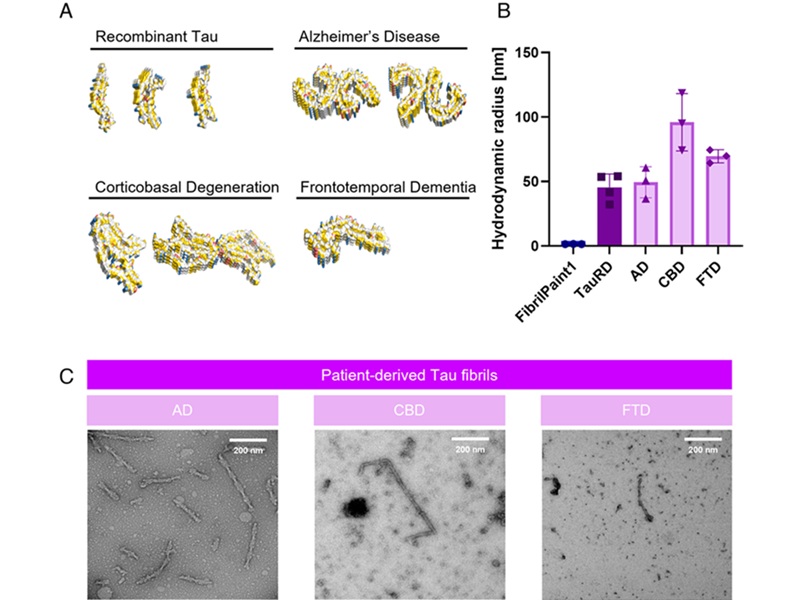
This fluorescence not only confirms the presence of the fibrils but also reveals their length and growth stage, offering a measurable indicator of disease progression. Importantly, FibrilPaint allows scientists to analyze blood and cerebrospinal fluid directly, eliminating the complex, time-consuming pretreatment steps required by existing methods.
The researchers believe FibrilPaint could revolutionize both early diagnosis and drug development for neurodegenerative diseases. By tracking disease progression in unprecedented detail, the technique, published in the journal PNAS, will allow clinicians to evaluate treatment effectiveness in real time.
“With our technique, we will soon be able to monitor the progression of the disease much more precisely and determine whether a treatment is effective,” said Françoise Dekker, a chemist at Utrecht University. “Our technique will eventually allow us to follow the course of the disease much more accurately and see whether a treatment really works.”
Related Links:
Utrecht University