Portable Label-Free Device Tracks Alzheimer's Disease in Real Time
Posted on 24 Oct 2025
Alzheimer’s disease is marked by the accumulation of toxic protein fragments in the brain that damage nerve cells and impair memory. Detecting and tracking these early changes remains a major challenge, as conventional diagnostic methods are often costly, time-consuming, and provide only static snapshots of disease progression. To address this issue, researchers have developed a new portable device that enables real-time monitoring of brain immune cell reactions to disease-related proteins.
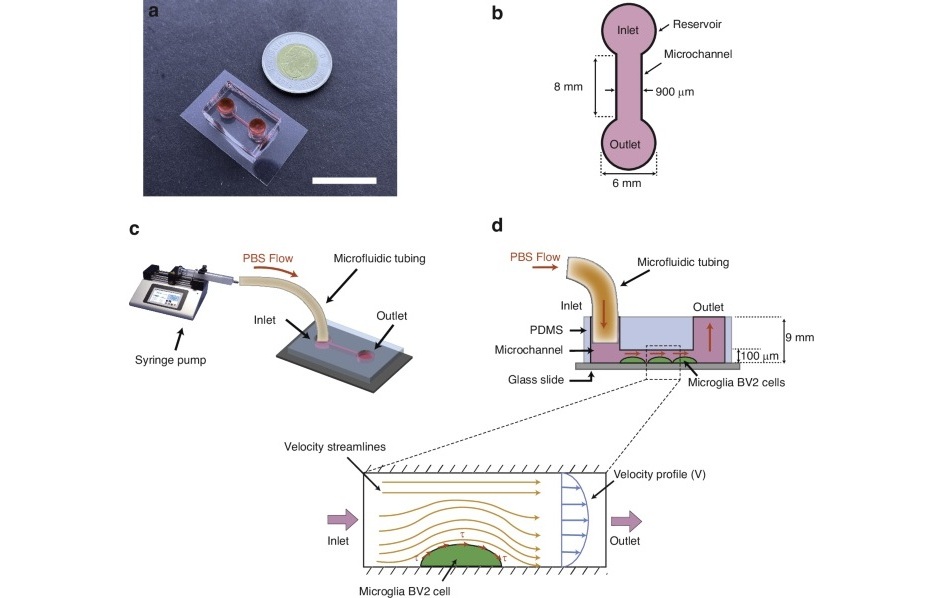
A team from Concordia University (Montreal, QC, Canada), in collaboration with McGill University (Montreal, QC, Canada), has created a microfluidic “lab-on-a-chip” platform that models the progression of Alzheimer’s disease in the brain. The chip allows scientists to observe how microglia—the brain’s immune cells—interact with amyloid beta oligomers, toxic protein clusters that are key markers of Alzheimer’s. By flowing liquid over microglial cells in tiny channels, the device measures how well the cells adhere to surfaces when exposed to increasing concentrations or prolonged exposure to these protein fragments.
When the microglial cells encounter high levels of amyloid beta oligomers, their adhesion weakens significantly. After 24 hours of exposure to high concentrations, the immune cells completely lost adhesion, indicating they were no longer viable. These findings, published in Microsystems & Nanoengineering, show that the chip effectively captures subtle, progressive changes in immune cell behavior associated with Alzheimer’s pathology.
Unlike conventional diagnostic tools that rely on labels such as dyes or antibodies, this chip offers a label-free, low-cost, and portable alternative. It enables continuous monitoring of immune cell activity, providing researchers with a dynamic view of disease progression. The technology could be used to assess potential treatments and screen drug candidates more efficiently, contributing to early detection and therapeutic innovation for neurodegenerative diseases.