


Advanced Urinary Analysis Method Expected to Significantly Reduce Number of Prostate Cancer Biopsies
By LabMedica International staff writers
Posted on 18 Mar 2020
A team of British researchers has developed an advanced, RNA and DNA biomarker-based urine test for diagnosis of prostate cancer, which is expected to significantly reduce the number of unnecessary biopsies performed every year.Posted on 18 Mar 2020
Prostate cancer exhibits extreme clinical heterogeneity; 10‐year survival rates following diagnosis approach 84%, yet prostate cancer is still responsible for 13% of all cancer deaths in men in the United Kingdom. Current practice assesses a patient's disease using a PSA (prostate specific antigen) blood test, prostate biopsy, and MRI. However, up to 60% of men with a raised PSA level are negative for prostate cancer on biopsy.
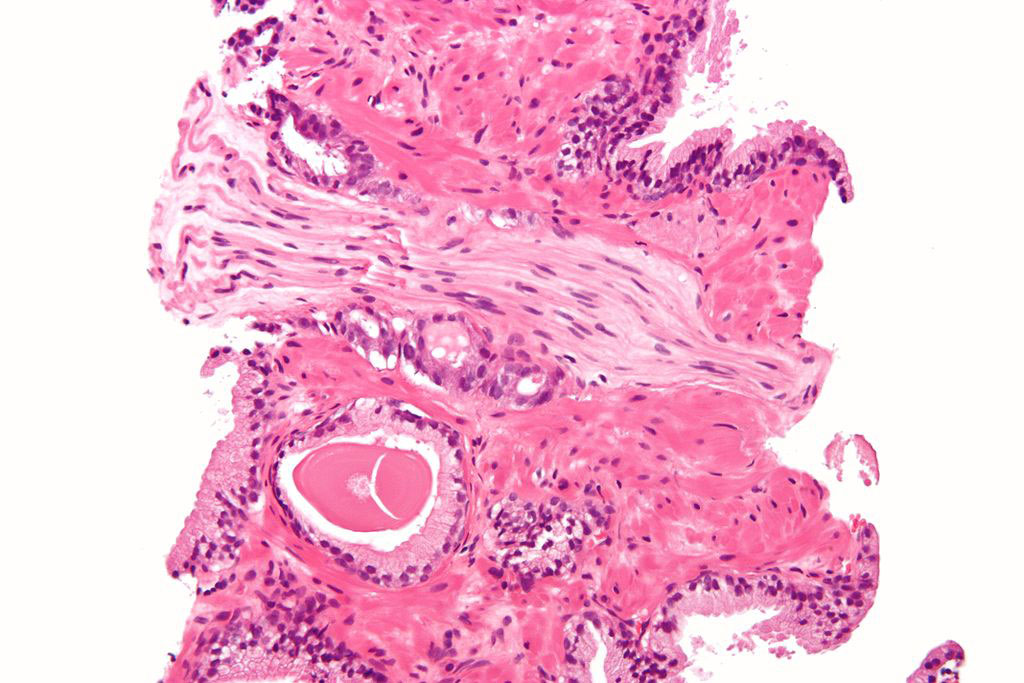
Image: Micrograph showing a prostate cancer (conventional adenocarcinoma) with perineural invasion (Photo courtesy of Wikimedia Commons)
Coupled with the high rates of diagnosis, prostate cancer is more often a disease that men die with rather than from. This illustrates the urgent need for clinical tools able to selectively identify those men with cancers that only require monitoring from those men harboring a disease that requires intervention.
Toward this end, investigators at the University of East Anglia (Norwich, United Kingdom) sought to develop a multivariable risk prediction model through the integration of clinical, urine‐derived cell‐free messenger RNA (cf‐RNA) and urine cell DNA methylation data capable of noninvasively detecting significant prostate cancer in patients in lieu of biopsy.
The investigators analyzed urine samples collected from 207 patients with clinical suspicion of prostate cancer (PSA greater than four nanograms per milliliter, adverse digital rectal examination, age, or lower urinary tract symptoms).
Machine learning techniques were used to integrate the biological markers into a prediction formula called ExoMeth. Results revealed that as the ExoMeth risk score increased, the likelihood of high‐grade disease being detected on biopsy was significantly greater.
Senior author Dr. Daniel Brewer, senior lecturer in cancer studies at the University of East Anglia, said, "It is still very early days for this research, but if ExoMeth were validated in a future study with many more patients, we could see an approximate 60% reduction in unnecessary biopsies in around five years."
The study was published in the March 9, 2020, online edition of the journal The Prostate.
Related Links:
University of East Anglia




Platinum Member

Automated Coagulation Analyzer
Hemolumi H6

Platinum Member
Integrated Biochemical & Immunological System
Biolumi CX Solution X10+C10
.jpg)
Gold Member

Clinical Chemistry Assay
Sorbitol Dehydrogenase (SDH)