Multi-Omics Approach Guides Relapsed Multiple Myeloma Treatment
By LabMedica International staff writers
Posted on 30 Aug 2018
Many patients with relapsed multiple myeloma are not often matched with correct treatment options in a timely or personalized manner, and most patients have a median survival rate of six years. With standard diagnosis and treatment, relapses are usually inevitable and fatal for most patients.Posted on 30 Aug 2018
The use of high-throughput DNA sequencing to match genetic mutations to cancer-killing drugs, allows treatment for patients with multiple myeloma. Sequencing has revealed wide heterogeneity across patients and complex sub-clonal structures, indicating that using personalized therapeutic approach can help improve patients with myeloma.
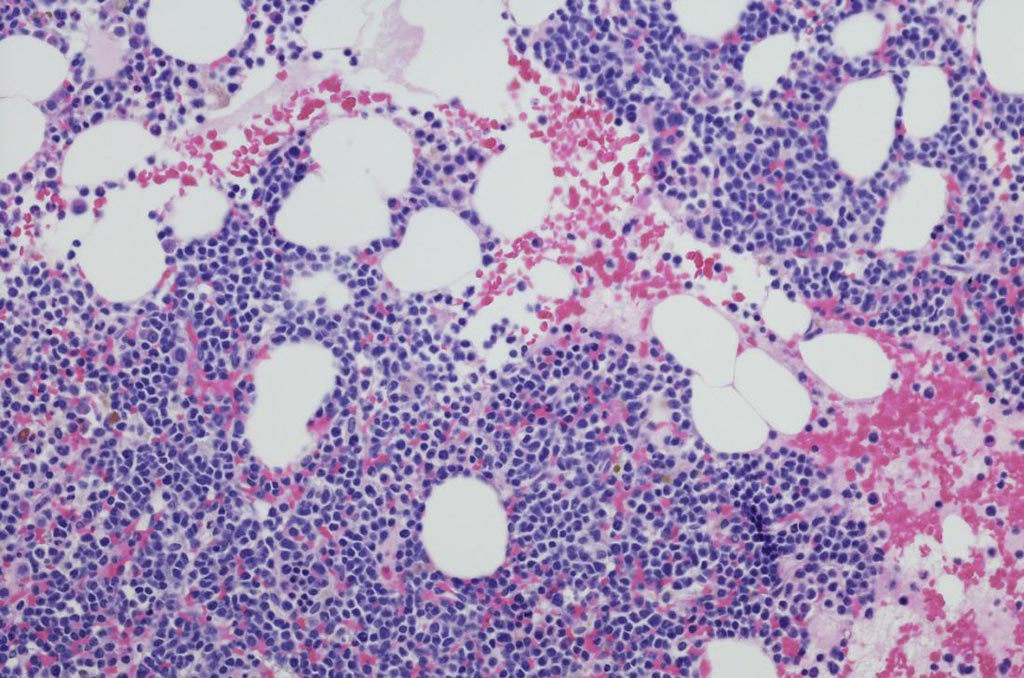
Image: Multiple myeloma, a cancer of the blood plasma (Photo courtesy of Medical News Today).
Scientists at the Mount Sinai Hospital (New York, NY, USA) and their colleagues performed a precision medicine trial using a group of 64 relapsed multiple myeloma patients. They collected 4 to 10 mL of bone aspirate, as well as peripheral blood samples, and extracted tumor genomic DNA and RNA from BM CD138+ cells. Whole-exome sequencing (WES) and RNA sequencing libraries were submitted to Illumina HiSeq2500 for paired-end sequencing (100 base pairs). Targeted sequencing was performed using the Lymphoma Extended targeted next-generation sequencing panel from Cancer Genetics.
The team generated treatment recommendations in 63 of 64 patients. Twenty-six patients had treatment implemented, and 21 were assessable. Of these, 11 received a drug that was based on RNA findings, eight received a drug that was based on DNA, and two received a drug that was based on both RNA and DNA. Sixteen of the 21 evaluable patients had a clinical response (i.e. reduction of disease marker ≥ 25%), giving a clinical benefit rate of 76% and an overall response rate of 66%, with five patients having ongoing responses at the end of the trial. The median duration of response was 131 days.
The authors concluded that a comprehensive sequencing approach can identify viable options in patients with relapsed and/or refractory myeloma, and they represent proof of principle of how RNA sequencing can contribute beyond DNA mutation analysis to the development of a reliable drug recommendation tool. The study was published in the August 2018 issue of the journal JCO Precision Oncology.
Related Links:
Mount Sinai Hospital




Platinum Member

Automated Coagulation Analyzer
Hemolumi H6
Gold Member

Blood-Based Protein Biomarker Solution for Alzheimer's Disease
BG-DTi2000.

New
Silver Member

Connectivity Solution
EKF Link
New
Neurofilament Light Chain Assay
Lumipulse G NfL Blood