Circulating Blood Markers Identified for Abnormal Heart Rhythms
By LabMedica International staff writers
Posted on 29 Mar 2018
The irregular heart rhythm atrial fibrillation (AF) increases the risk of stroke and heart failure, but is often undiagnosed because of a lack of symptoms. AF increases the risk of developing strokes, heart failure, and even dementia.Posted on 29 Mar 2018
Four short lengths of RNA (miRNAs) have been identified that show increased expression in the circulating blood of AF patients. These miRNAs could be used as potential biomarkers to predict the onset of AF disease. MiRNAs control gene expression after the transcription stage, and have been suggested as possible markers for some cardiovascular diseases because of their stability in the bloodstream.
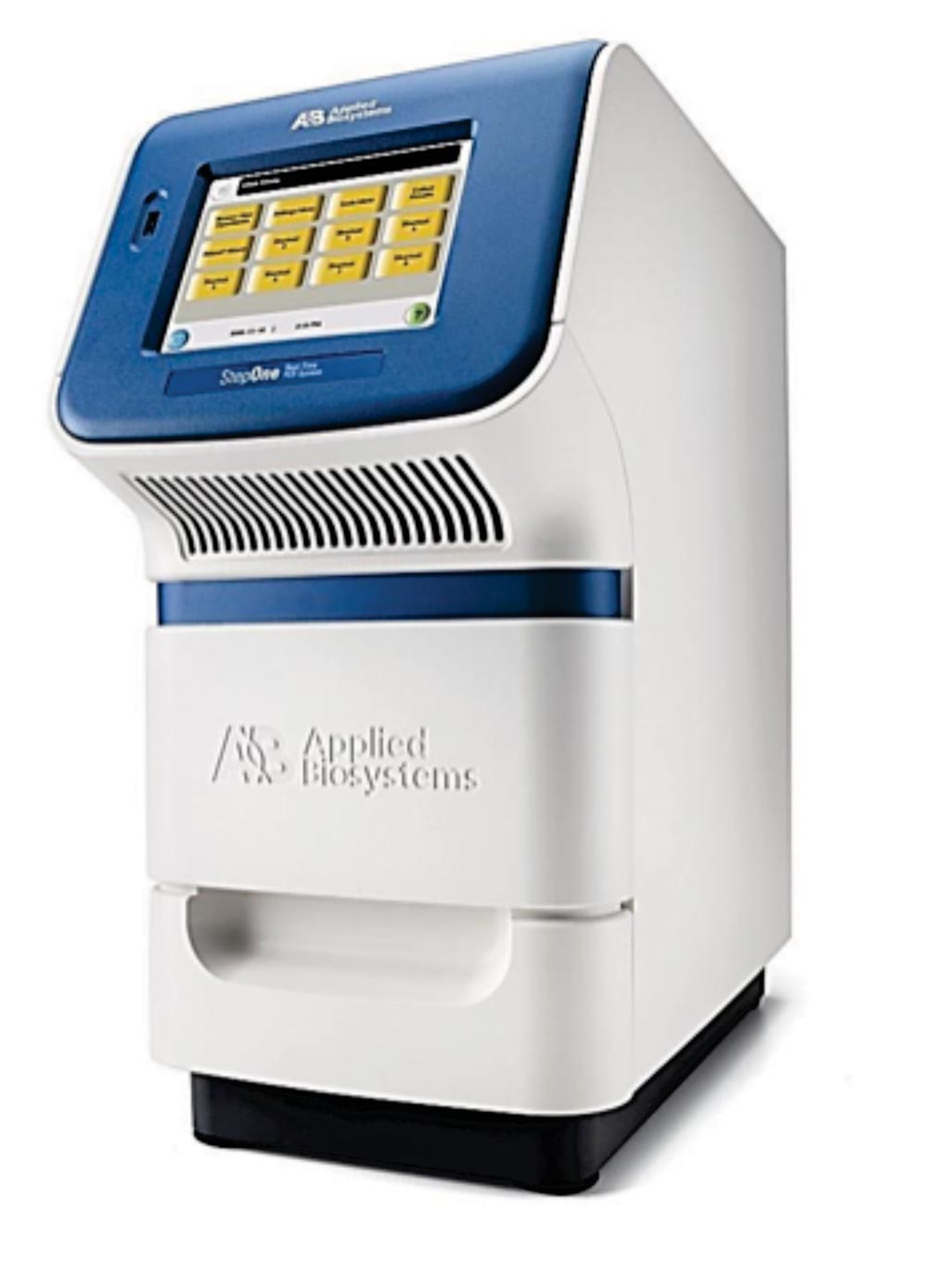
Image: The Applied Biosystems Step One Real-Time PCR (Photo courtesy of Thermo Fisher Scientific).
A team of scientists at the Tokyo Medical and Dental University (Tokyo, Japan) recruited 60 AF patients and 55 controls for their study. The AF group comprised 30 patients with paroxysmal AF (PAF) and 30 with chronic AF (CAF). The control group consisted of 30 age-matched controls (AC) who had no AF-related symptoms, and 25 healthy young controls (YC). Of the total, 15 age-matched cases were selected for a comprehensive analysis of the miRNA and the remaining 100 subjects were enrolled for an individual miRNA expression analysis.
Blood samples were collected from peripheral veins and serum was obtained by centrifugation at 1,600×g for 10 minutes, and stored at −80 ℃ until the RNA was isolated. The total RNA was extracted from the serum using mirVana PARIS Kit. The expression of individual miRNAs in serum was quantified by a quantitative reverse transcriptase polymerase chain reaction (RT-PCR). Isolated total RNA samples (2 µL each) were reversely transcribed into cDNA and quantified using a Thermo Fisher Scientific TaqMan miR probe. PCR reactions were performed on a Thermo Fisher Scientific Step One Realtime PCR system. The authors also used a murine model.
The individual assessment revealed that four miRNAs: miR-99a-5p, miR-192-5p, miR-214-3p, and miR-342-5p, were significantly upregulated in AF patients. Statistical analysis of diagnostic ability showed that miR-214-3p and miR-342-5p had the highest accuracy as individual biomarkers at predicting AF, but that a combined analysis of all four miRNAs slightly improved this accuracy.
Tetsuo Sasano, MD, PhD, the corresponding author of the study, said, “The same two miRNAs showed increased expression in a subset of patients with intermittent AF and another subset with chronic AF. The increases were in comparison both with healthy controls of the same age and young healthy controls, suggesting these miRNAs may predict AF regardless of the age of the individual.” The study was released for publication on February 5, 2018, in the Circulation Journal.
Related Links:
Tokyo Medical and Dental University




Platinum Member

Automated Coagulation Analyzer
Hemolumi H6
Gold Member

Quantitative POC Immunoassay Analyzer
EASY READER+


Automated Clinical Chemistry Analyzer
Envoy 500+

New
Silver Member

Connectivity Solution
EKF Link