Newly Emerged Superbug Discovered
By LabMedica International staff writers
Posted on 15 Sep 2017
Hypervirulent Klebsiella pneumoniae strains often cause life-threatening community-acquired infections in young and healthy hosts, but are usually sensitive to antibiotics.Posted on 15 Sep 2017
A newly emerged superbug, hyper-resistant and hypervirulent K. pneumoniae, has been discovered, which may cause untreatable and fatal infections in relatively healthy individuals and will pose enormous threat to human health.
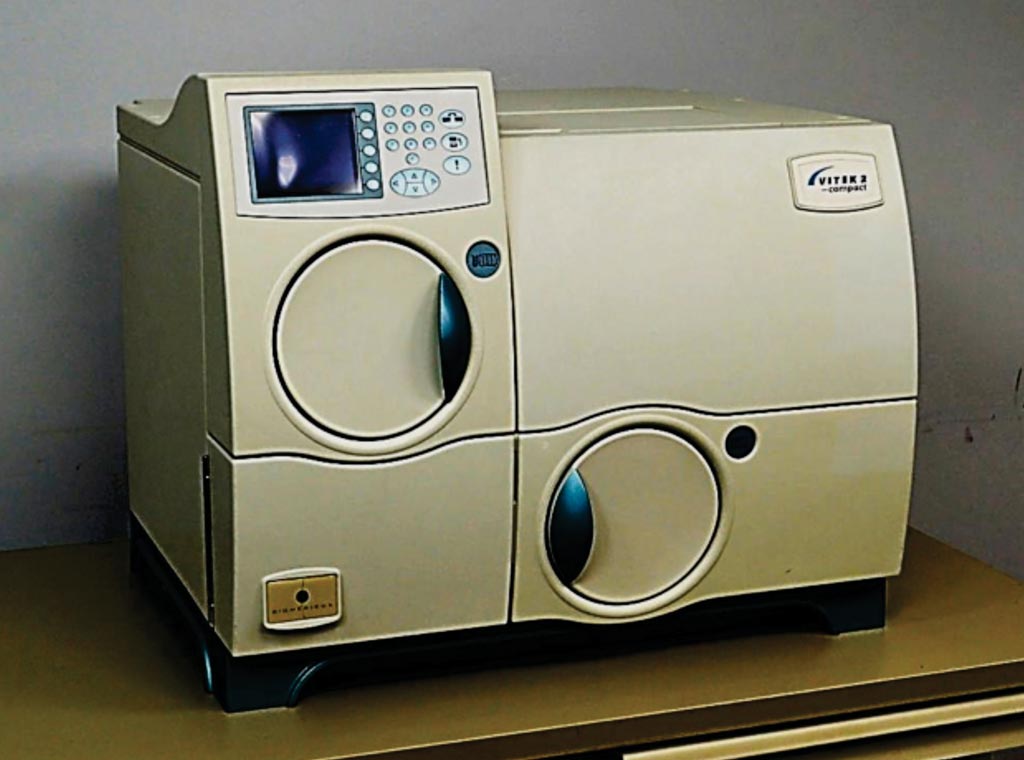
Image: The VITEK 2 COMPACT instrument offers the capacity to help improve therapeutic success and patient outcomes through reliable microbial identification (ID) and antibiotic susceptibility testing (AST) (Photo courtesy of bioMérieux).
Scientists at The Hong Kong Polytechnic University (Kowloon, Hong Kong Special Administrative Region, China) and their colleagues conducted an investigation into a fatal outbreak of pneumonia in the Second Affiliated Hospital of Zhejiang University (Hangzhou, China) in February 2016. The study involved five patients who underwent surgical operation for multiple-trauma. All of them were later infected in the intensive care unit (ICU) and developed severe pneumonia, and eventually died of septicemia and multiple organ failure. The patients were aged 53 to 73 years and were admitted to the intensive care unit between late February and April 2016.
The team collected 21 carbapenem-resistant K. pneumoniae strains from five patients and characterized these strains for their antimicrobial susceptibility, multilocus sequence types, and genetic relatedness using the VITEK-2 compact system (bioMérieux, Marcy-l'Étoile, France), multilocus sequence typing, and whole genome sequencing. The causative agent of these five patients was found to be a carbapenem-resistant K. pneumoniae (CRKP) strain, a type of previously defined superbug. Furthermore, these CRKP strains are also hypervirulent and belong to ST11 type of CRKP, the most prevalent and transmissible CRKP strains in Asia. Genomic analyses showed that the emergence of these ST11 carbapenem-resistant hypervirulent K pneumoniae strains was due to the acquisition of a roughly 170 kbp pLVPK-like virulence plasmid by classic ST11 carbapenem-resistant K. pneumoniae strains. They also detected these strains in specimens collected in other regions of China.
The ST11 CR-HvKP strains do not only infect lungs and cause pneumonia, but also invade the bloodstream and other internal organs. Due to its hypervirulence and phenotypic resistance to commonly used antibiotics, ST11 CR-HvKP strains may cause untreatable and fatal infections in relatively healthy individuals with normal immunity. The study was published on August 29, 2017, in the journal The Lancet Infectious Diseases.




Platinum Member

Automated Coagulation Analyzer
Hemolumi H6
Gold Member

Automatic Hematology Analyzer
CF9600

Hematology Consumables
Bioblood Devices

Automatic CLIA Analyzer
Shine i6000