DNA Analysis Clarifies Ancestry of Triple-Negative Breast Cancer Patients
By LabMedica International staff writers
Posted on 04 Oct 2016
Age of onset and severity of triple-negative breast cancer are related to ethnic origin, which can be definitively established by analysis of mitochondrial DNA.Posted on 04 Oct 2016
Triple-negative breast cancer (TNBC) lacks estrogen, progesterone, and human epidermal growth factor receptor 2 (HER2)/neu receptors, and is aggressive and difficult to treat. Patients with TNBC tend to be younger and are more likely to be African-American. However, between 10 and 30% of Americans may not be aware of a mixed ancestry that increases their susceptibility to the disease.
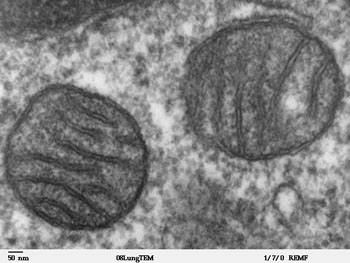
Image: A scanning electron micrograph (SEM) of two mitochondria from mammalian lung tissue displaying their matrix and membranes (Photo courtesy of Wikimedia Commons).
Mitochondrial DNA (mtDNA), which is distinct from nuclear DNA, is maternally inherited and allows for origin determination. To assess the value of mtDNA profiling to establish ethnic origin in TNBC patients, investigators at the University of Texas Southwestern Medical Center (Dallas, USA) examined 92 patients: 31 self-described as African-American, 31 self-described as White, and 30 self-described as Hispanic.
Results revealed that Hispanic patients had largest tumor size and youngest age of onset among the three groups. However, there was a discrepency between mtDNA analysis and self-described ethnicity in 13% of the 92 patients. The highest discordance (26%; eight patients) was noted in self-described Hispanic patients: three had Nigerian ancestry, and one individual demonstrated haplogroup K mtDNA (Ashkenazi Jewish ancestry).
“We found 12 differences among 92 patients, a significant amount,” said senior author Dr. Roshni Rao, associate professor of surgery at the University of Texas Southwestern Medical Center. “Some patients who self-identified as Hispanic had African-American ancestry. One Hispanic woman was found to be Ashkenazi Jewish. Both African-Americans and some Ashkenazi Jewish populations have a higher risk for triple negative breast cancer. “If you know your ancestry, then you could be included in the group that gets screened at a younger age.”
The study was published in the September 1, 2016, online edition of the journal Cancer.
Related Links:
University of Texas Southwestern Medical Center




Platinum Member

Automated Coagulation Analyzer
Hemolumi H6

Gold Member

POC Helicobacter Pylori Test Kit
Hepy Urease Test


POC Immunoassay Analyzer
Procise DX

Immunofluorescence Analyzer
IFA System