Blood Marker Determines Response To Colorectal Cancer Drug
By LabMedica International staff writers
Posted on 26 May 2016
A marker has been identified that shows up in a blood test that determines which patients with colorectal cancer that has metastasized would benefit from receiving the drug cetuximab.Posted on 26 May 2016
Only a proportion of patients with colorectal cancer receiving cetuximab derive benefit from the drug; however, other than the Rat sarcoma gene(RAS) and B-RAF oncogene (BRAF) mutations, no biomarkers have been identified as clinically useful predictors of response to cetuximab.
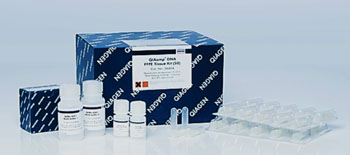
Image: The QIAamp FFPE DNA tissue kit (Photo courtesy of Qiagen).
Scientists at the Princess Margaret Cancer Centre (Toronto, ON, Canada) and their international colleagues used formalin-fixed and paraffin-embedded (FFPE) normal and tumor tissue samples from local sites were archived at a central tumor bank, where a single 1.2-mm diameter core was taken from each block. Extracting DNA from glass slides (some over a decade old) yielded highly variable success; thus, only DNAs obtained from cores were analyzed. DNA was extracted using the QIAamp FFPE DNA Kit (Qiagen, Hilden, Germany). DNA quantity (spectrophotometry) and quality (polymerase chain reactions) were checked. DNA was genotyped blindly by Transgenomic, Inc (New Haven, CT, USA) using Sanger sequencing.
Geoffrey Liu, MD, a senior scientists and lead author said, “Our study discovered that the blood marker Fc-γ receptor FCGR2A identifies a new group of patients that will benefit from taking cetuximab. With this finding, we believe we are now on the way to move it into the clinical setting to provide patients targeted, effective treatment. Our finding, which resulted from analyzing archived tumor and normal tissue samples from some of the 572 patients enrolled in that trial, further refines this quest and defines another subset of patients who will respond to the drug. So instead of looking at aspects in the tumors, which is where RAS mutations show up, we looked at certain things in the blood and normal tissues that we could measure for heritable genetic variations.” The study was published on May 15, 2016, in the journal Clinical Cancer Research.
Related Links:
Princess Margaret Cancer Centre
Qiagen
Transgenomic




Platinum Member

Automated Coagulation Analyzer
Hemolumi H6

Gold Member

POC Helicobacter Pylori Test Kit
Hepy Urease Test

CMV CLIA Diagnostic
CLIA CMV IgA Screen Group

All-in-One Molecular System
AIO M160