Blood Test Developed for Aggressive Bone Cancer
By LabMedica International staff writers
Posted on 18 Feb 2015
A simple blood test has been developed to diagnose bone cancer, specifically Chondrosarcoma, an extremely unpredictable form of bone cancer that can develop at any age. Posted on 18 Feb 2015
Cancer which starts in the bones are typically more aggressive than other types and some forms are both chemotherapy and radiotherapy resistant and in these cases surgery is the only option, and survival rates have not improved in the last 25 years.
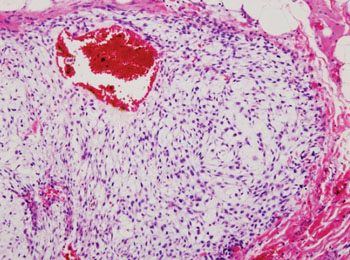
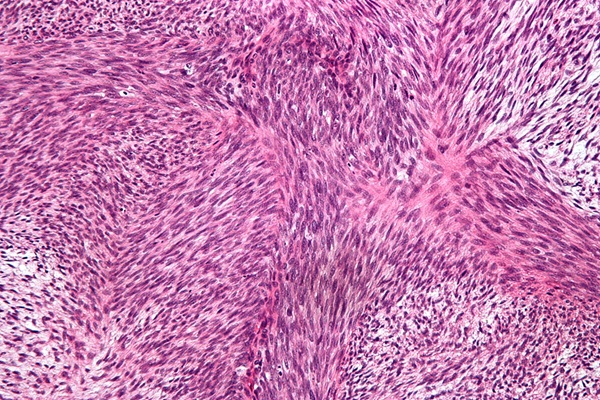
Image: Histopathology of chondrosarcoma of the chest wall from surgical resection of recurrent mass (Photo courtesy of KGH/Wikipedia).
Scientists at University of East Anglia (Norwich, UK) collaborating with the Norfolk and Norwich University Hospital (Norwich, UK) and the Royal Orthopaedic Hospital (Birmingham, UK) are developing a new “fingerstick” blood test that could make diagnosis quicker for those at high risk, and if caught early, reduce the severity of amputation.
The team is mainly focusing on primary bone cancer, which means cancer that has originated in the bones, rather than secondary bone cancer which has spread to the bones from other parts of the body. In most, if not all cases, surgery is the only option and unfortunately this means limb amputation. Even with this drastic surgery, recurrence of the tumor is extremely common and overall survival rates are low with only 10% of patients living a year in the most aggressive cases.
While studying the normal function and development of cells which this cancer originates from, the team observed a family of small molecules called micro ribonucleic acids (micoRNAs) which potentially play a role in causing cancerous change. MicroRNAs are found in all our cells and they control the level at which our genes are active or switched off. They were recently discovered to be “leaked” from tumor cells into the bloodstream, therefore they are also very promising biomarkers of disease. The test is cheap, noninvasive and could also work to diagnose other cancers.
Related Links:
University of East Anglia
Norfolk and Norwich University Hospital
Royal Orthopaedic Hospital




Platinum Member

Automated Coagulation Analyzer
Hemolumi H6
Gold Member

NEW PRODUCT : SILICONE WASHING MACHINE TRAY COVER WITH VICOLAB SILICONE NET VICOLAB®
REGISTRED 682.9


Automated Clinical Chemistry Analyzer
Envoy 500+

All-in-One Molecular System
AIO M160