Clinical Exome Sequencing Genetically Identifies Rare Mendelian Disorders
By LabMedica International staff writers
Posted on 29 Oct 2014
Advances in next-generation sequencing technologies have decreased the cost of sequencing per base pair about 10-fold, improved accuracy, and greatly increased the speed of generating sequence data.Posted on 29 Oct 2014
Exome sequencing, which sequences the protein-coding region of the genome, has been rapidly applied to variant discovery and recent increases in accuracy have enabled development of clinical exome sequencing (CES) for mutation identification in patients with suspected genetic diseases.
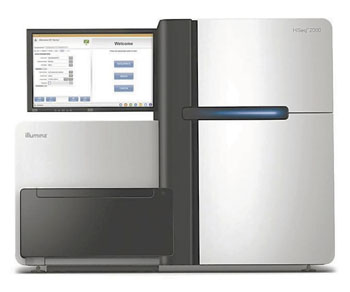
Image: The HiSeq 2000 ultra-high-throughput sequencing system (Photo courtesy of Illumina).
Scientists at the University of California, Los Angeles (UCLA; CA, USA) performed clinical exome sequencing on 814 consecutive patients with undiagnosed, suspected genetic conditions. Clinical exome sequencing was conducted as trio-CES, both parents and their affected child sequenced simultaneously, to effectively detect de novo and compound heterozygous variants or as proband-CES with only the affected individual sequenced, when parental samples were not available.
Whole blood collected in tubes with anticoagulants or purified genomic DNA from tissue sources was accepted for testing. Genomic DNA extraction, library preparation, sequencing, and data analysis were performed using validated protocols. Exome capture was performed using SureSelect Human All Exon V2 Kit (Agilent Technologies; Santa Clara, CA, USA) and sequencing was performed using the HiSeq 2000 for a 50-bp paired-end run or HiSeq 2500 for a 100-bp paired-end run (Illumina; San Diego, CA, USA).
Of the 814 cases, the overall molecular diagnosis rate was 26%. The molecular diagnosis rate for trio-CES was 31% 1(27/410 cases), and 22% (74/338 cases) for proband-CES. In cases of developmental delay in 138 children, who were under five years of age, the molecular diagnosis rate was 41% (45/109), for trio-CES cases and 9% (2/23) for proband-CES cases. The significantly higher diagnostic yield of trio-CES was due to the identification of de novo and compound heterozygous variants.
Wayne W. Grody, MD, PhD, a professor of pathology and coauthor of the study, said, “All families deserve a clear diagnosis of their child's condition. Exome sequencing plays an important role in identifying the precise cause of a child's illness. This is immediately useful to families and physicians in understanding how the disease occurred, preventing unnecessary testing, and developing the best strategies to treat it.” The study was published on October 18, 2014, in Journal of the American Medical Association.
Related Links:
University of California, Los Angeles
Agilent Technologies
Illumina




Platinum Member

Automated Coagulation Analyzer
Hemolumi H6
Gold Member

Fully-auto Specific Protein (Nephelometry) Analyzer
PA240
Platinum Member
Integrated Biochemical & Immunological System
Biolumi CX Solution X10+C10

POC Immunoassay Analyzer
Procise DX