Gene Mutations Found For Malignant Brain Tumor
By LabMedica International staff writers
Posted on 23 Aug 2011
Genetic mutations found on chromosomes could increase the chances for an effective combination of drug therapy to treat the second most common type of brain tumor. Posted on 23 Aug 2011
The primary cancer genes involved in the development of oligodendrogliomas (ODs) were known to be on the chromosomes 1 and 19, but not the particular gene information, which was found using whole genome sequencing technology.
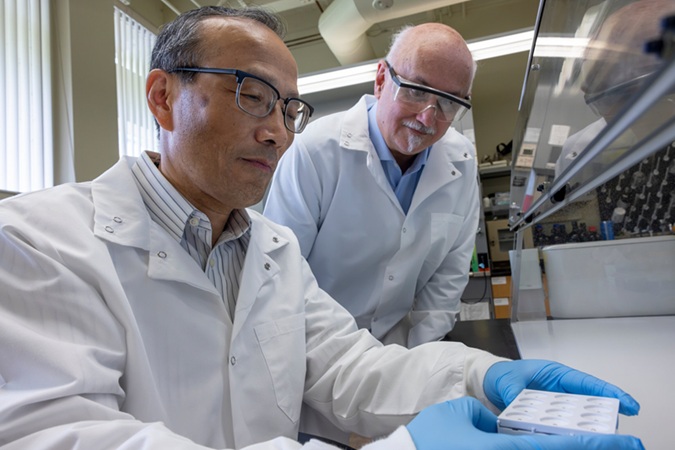
Scientists at Duke University Medical Center (Durham, NC, USA) and Johns Hopkins University (Baltimore, MD, USA) performed exomic sequencing of seven malignant brain tumors. They sequenced the coding exons of 20,687 genes in DNA from the seven anaplastic ODs using the HiSeq platform (Illumina, San Diego, CA, USA).
The investigators found the protein capicua homolog gene (CIC) on chromosome 19 and far upstream element-binding protein 1 gene (FUBP1) on chromosome 1 based on an initial study of seven oligodendrogliomas and uncovered six mutations and two mutations, respectively, in the seven tumors. Further study of 27 more of these tumors showed that there were 12 and 3 mutations of CIC and FUBP1, respectively. The two genes were rarely mutated in other types of cancers, indicating that they are oligodendroglioma-specific genes. The genes they identified are tumor suppressor genes. The cancer-related pathways that involve these genes could become targets for future treatments.
Hai Yan, MD, PhD, co-corresponding author of the study, said, "The team used whole genome sequencing technology so that no genes would be excluded, and we found to our surprise that one gene, on chromosome 19, was mutated in six out of the seven initial tumor specimens we sequenced. A mutation frequency of 85% is very high." Another very important feature is that the genes could be used as biomarkers to distinguish this type of cancer from other types of brain tumors. The study was published on August 4, 2011 in Science.
Related Links:
Duke University Medical Center
Johns Hopkins University
illumina




Platinum Member

Automated Coagulation Analyzer
Hemolumi H6
Gold Member

Fully-auto Specific Protein (Nephelometry) Analyzer
PA240


Automated Clinical Chemistry Analyzer
Envoy 500+

HPV Test
Allplex HPV28 Detection