Molecular AI Model Refines Risk Prediction in Pediatric Brain Tumors
Posted on 04 Nov 2026
Choosing treatment for a child with a malignant brain tumor requires balancing cancer control against lasting effects on learning, development, and quality of life. This balance is complicated by differences in outcomes among children within the same clinical risk group. To help refine these assessments, researchers have developed an artificial intelligence model designed to provide more individualized survival predictions for pediatric brain tumors.
An international team led by Dana-Farber Cancer Institute (Boston, MA, USA) developed MANTIS, short for Methylation profiling and Artificial Neural networks for Time-dependent Individualized Survival predictions. The model uses DNA methylation profiling, a test already used in brain tumor diagnosis, to generate personalized survival predictions for children with medulloblastoma and ependymoma. Based on each tumor’s biology, it estimates how survival probability changes over time, providing information beyond broad risk classifications.
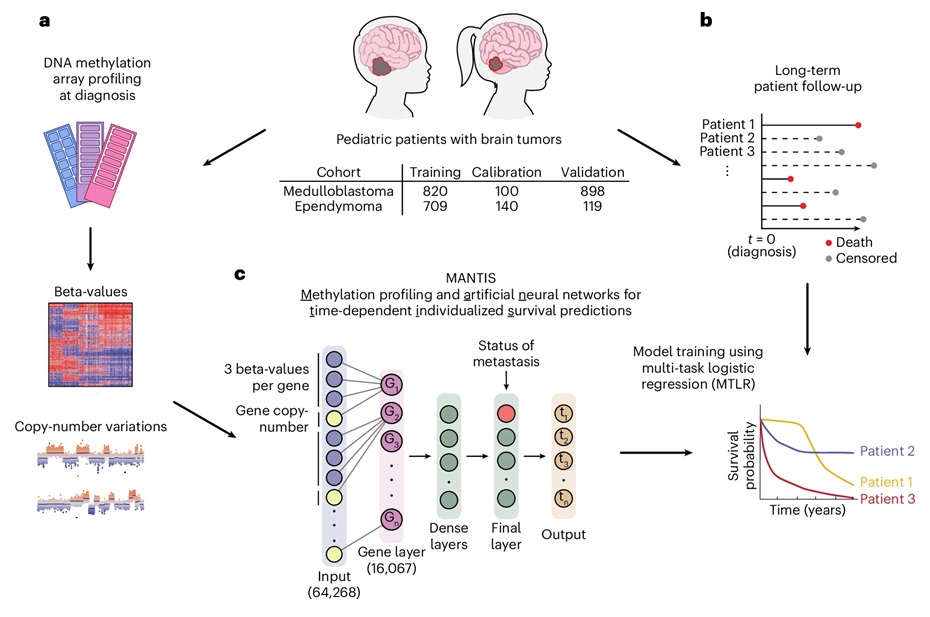
MANTIS combines genome-wide molecular data, including DNA methylation patterns and copy number changes, with long-term patient follow-up. Researchers initially developed the model for medulloblastoma, one of the most common malignant brain tumors in children, before extending the framework to ependymoma, another pediatric brain tumor with widely variable outcomes.
Across several large validation cohorts, MANTIS outperformed current risk-prediction approaches for many patients. The team also adapted it to estimate the likely effects of different radiation doses in medulloblastoma. Analysis suggested that more than half of children with average-risk medulloblastoma may be candidates for lower-dose craniospinal irradiation. In this group, lower-dose treatment was associated with better cognitive outcomes without a statistically significant survival disadvantage being detected.
Published in Nature Genetics on November 3, 2026, the findings build on molecular information already generated during routine tumor testing. The researchers suggested that similar AI-based methods could eventually extend to other pediatric and adult cancers in which patients sharing a diagnosis experience different clinical courses.
“Our goal is to move beyond broad risk categories and toward a more individualized understanding of each child's tumor. For children with brain tumors, that could help us better match treatment intensity to the biology of the disease and, ultimately, reduce long-term side effects for some patients,” said Volker Hovestadt, Ph.D., computational biologist at Dana-Farber and senior author of the study.
“One exciting aspect of this work is that it shows how artificial intelligence can learn from molecular tests that are already part of care. With further clinical study, this type of approach could help support more personalized treatment decisions not only for pediatric brain tumors but potentially for many other cancers as well,” said Sabina Stefan, Ph.D., postdoctoral researcher at Dana-Farber and first author of the study.
Related Links
Dana-Farber Cancer Institute







.jpg)