Microfluidic Assay Predicts Treatment Response in Pediatric Leukemia
Posted on 29 Oct 2026
Acute lymphoblastic leukemia (ALL) is a rapidly developing blood cancer that can disrupt production of mature infection-fighting white blood cells within months. More than 120,000 people in the U.S. are living with ALL, with about 6,000 new cases diagnosed each year, including more than 3,500 in children.
Treatment often involves combinations of chemotherapy, targeted therapy, immunotherapy, and bone marrow transplantation, but determining how an individual patient will respond to specific drug combinations and doses remains difficult before therapy begins. To address this challenge, researchers have developed a lab-on-a-chip approach for testing pediatric ALL drug responses at diagnosis.
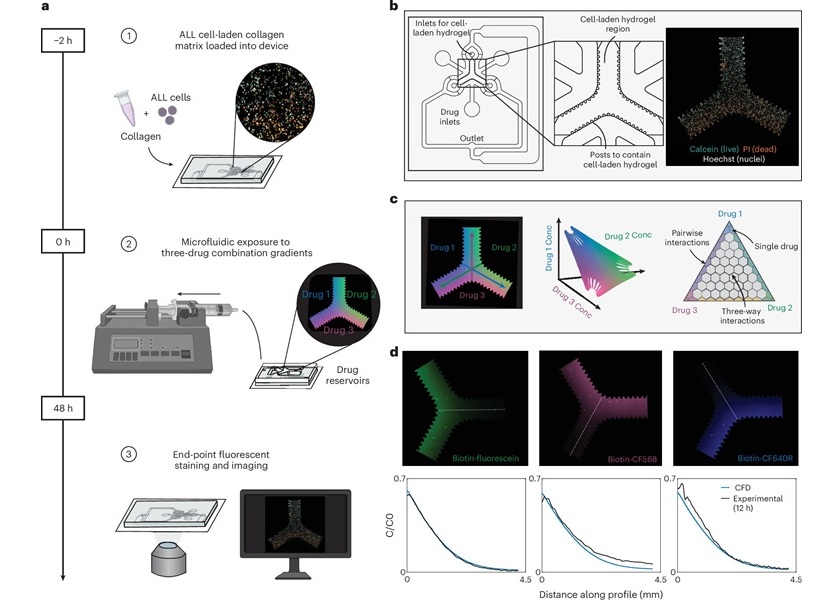
A team of scientists at Emory University, Children’s Healthcare of Atlanta, and Georgia Tech has developed GradientScreen, a microfluidic assay designed to measure how a patient’s leukemia cells respond to drug combinations using a single blood or bone marrow sample. The lab-on-a-chip exposes leukemia cells to three-drug combinations and measures how many cancer cells survive. Rather than testing each drug pair and dose ratio separately, the assay uses microfluidic technology to evaluate the full range of combination ratios within a three-drug regimen in a single experiment.
By comparing responses to individual drugs and drug combinations, GradientScreen identifies combinations and dose ratios that produce stronger effects together. These response patterns are intended to reflect how a patient’s leukemia may respond to treatment, complementing genomic and related data with direct measurements of drug sensitivity.
In a retrospective study, the platform was evaluated using 17 leukemia cell and bone marrow samples from patients with ALL. The samples were provided by the Aflac Cancer and Blood Disorders Center of Children’s Healthcare of Atlanta. GradientScreen results correlated with patient treatment outcomes, including residual disease after induction therapy, the first month of chemotherapy, and whether the patient later relapsed.
The study was published in Nature Biomedical Engineering on October 23, 2026. The collaborators stated that the technology could help identify harder-to-treat patients earlier and more precisely match them with new or alternative treatment approaches. Next steps include expanding the platform to other leukemia types, including acute myeloid leukemia, and evaluating it in both adult and pediatric patients.
“One of the holy grails in oncology is the ability to identify which patient is likely to be unresponsive to standard treatment before initiation of therapy begins, and to personalize which combination of standard chemotherapies with newer targeted or biological agents would be most beneficial, and at which dosages, for that particular person,” said Wilbur Lam, M.D., Ph.D., professor of pediatrics and biomedical engineering at Emory University and Georgia Tech and principal investigator on the study.
"This is a significant advancement in helpng pediatric oncologists nationwide understand which drugs to administer to patients who are most likely to resist standard chemotherapy," added Lam.
Related Links
Emory University
Georgia Tech
Children’s Healthcare of Atlanta