Rapid Urine Test Speeds Antibiotic Selection for UTIs
Posted on 01 Apr 2026
Urinary tract infections are a common reason for antibiotic prescribing and have led to more than 800,000 hospital admissions across England in the past five years, according to National Health Service data. Conventional urine culture and antibiotic susceptibility testing can take two to three days, during which empiric therapy may be mismatched, while resistance is present in about a quarter of samples. To address these delays and improve treatment accuracy, researchers have developed a direct-from-urine test that identifies an effective antibiotic in hours rather than days.

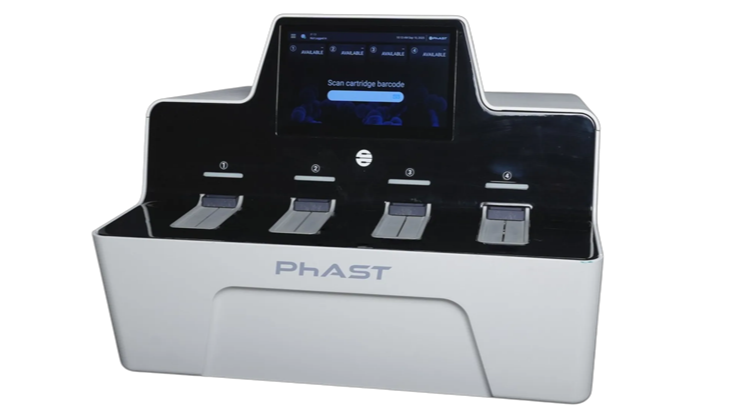
The technology eliminates the need for an overnight culture step. After simple sample processing, a cartridge containing fine tubes preloaded with different antibiotics is placed directly into the urine specimen and inserted into an instrument. Optical imaging then monitors bacterial growth in each tube; inhibited growth indicates susceptibility, while continued growth signals resistance, enabling results in under six hours.
Accuracy was assessed using 352 urine samples already collected for routine testing at Basingstoke and North Hampshire Hospital, showing 96.95% agreement with the reference method across seven first‑line antibiotics for treating UTI. A second study used 90 fresh emergency department samples split into duplicates, with boric acid preservative added to one of each pair, and demonstrated 98.75% agreement for direct‑from‑urine testing.
According to the authors, this is the first study to directly compare urine samples with and without boric acid to assess the preservative’s impact on a rapid direct‑from‑urine approach. The work marks an important milestone for Astratus Limited, a University of Reading spin‑out founded in November 2024 by the research team behind the test.
“By the time the laboratory delivers the result under current methods, a patient may already have finished their antibiotics, or been given ones that do not work. Being able to tell a doctor the same day which antibiotic to use means the patient gets the right treatment sooner, reducing the risk of resistance developing and their infection turning into potentially lethal sepsis,” said Dr. Oliver Hancox, Chief Executive Officer of Astratus Limited.
Related Links
University of Reading