New RT-LAMP Assay Offers Affordable and Reliable Pathogen Detection for Resource-Limited Settings
Posted on 15 Jul 2025
The high cost and logistical complexities associated with rapid, point-of-care tests have long hampered widespread access to molecular diagnostics, especially in low- and middle-income countries. In these settings, the need for accurate and affordable pathogen detection is particularly pressing, especially during outbreaks. Traditional diagnostic methods often rely on expensive tests, require cold chains for transport and storage, and demand sophisticated laboratory setups, making them difficult to deploy in resource-limited environments. Researchers have now developed a new, more affordable solution aimed at addressing these issues, making molecular diagnostics more accessible and feasible in underserved areas.
A team from the Vienna BioCenter (Vienna, Austria) and the West African Center for Cell Biology of Infectious Pathogens (WACCBIP) at the University of Ghana (Accra, Ghana) has developed a lyophilized open-source reverse transcription loop-mediated isothermal amplification (RT-LAMP) assay for pathogen detection. This assay uses non-proprietary enzymes, including reverse transcriptase, DNA polymerase, and uracil DNA glycosylase, to reduce reliance on expensive commercial solutions. The assay is both heat-stable and robust, making it possible to store and transport the diagnostic tools at ambient or elevated temperatures, bypassing the need for cold chains. The RT-LAMP assay is adaptable for rapid detection of various pathogens and can be used with swab or gargle samples, demonstrating high sensitivity and providing a colorimetric result. The open-source nature of the assay means that the enzyme mixture can be self-produced, further driving down costs and improving accessibility.
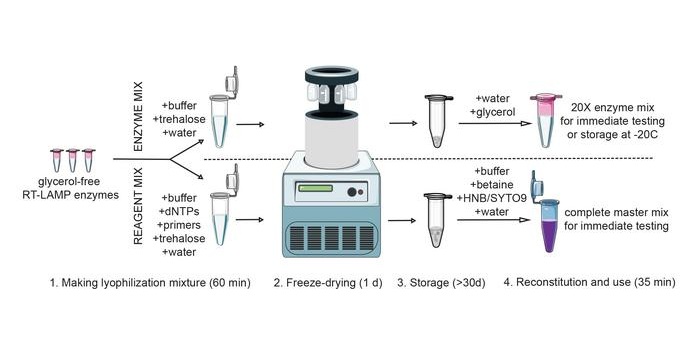
The assay was tested in a proof-of-concept study with lyophilized RT-LAMP reaction mixes shipped to Ghana, where it showed performance comparable to results obtained in Vienna. This study, published in Life Science Alliance, demonstrated that the assay is both robust and suitable for field implementation across diverse settings. The researchers envision multiple models for implementation, ranging from centralized production to decentralized in-lab preparation. The team is working to make the assay more widely accessible, having deposited essential vectors and providing protocols for protein expression and purification on publicly accessible platforms. Moving forward, the researchers plan to further validate the system's performance across a broader range of pathogens and settings.
“By making reliable pathogen detection both affordable and independent of complex logistics like cold chains, our protocols empower laboratories and public health institutions worldwide to take control of their diagnostic capabilities, especially during outbreaks,” said co-first author Martin Matl, PhD.
Related Links:
Vienna BioCenter
WACCBIP