Novel Microfilarial Antigen Diagnoses Lymphatic Filariasis Infections
Posted on 08 Jun 2022
Lymphatic filariasis is a neglected tropical disease caused by the filarial nematodes Wuchereria bancrofti, Brugia malayi and Brugia timori. Lymphatic filariasis (LF) is a deforming and disabling disease caused by parasitic nematodes that are transmitted by mosquitoes.
Antibodies to some filarial antigens become detectable in blood sooner after exposure or infection, than microfilaria (Mf) or circulating filarial antigen (CFA). Furthermore, antibody assays may be more sensitive than tests for CFA or Mf for detecting filarial infections or exposure to infection in children.
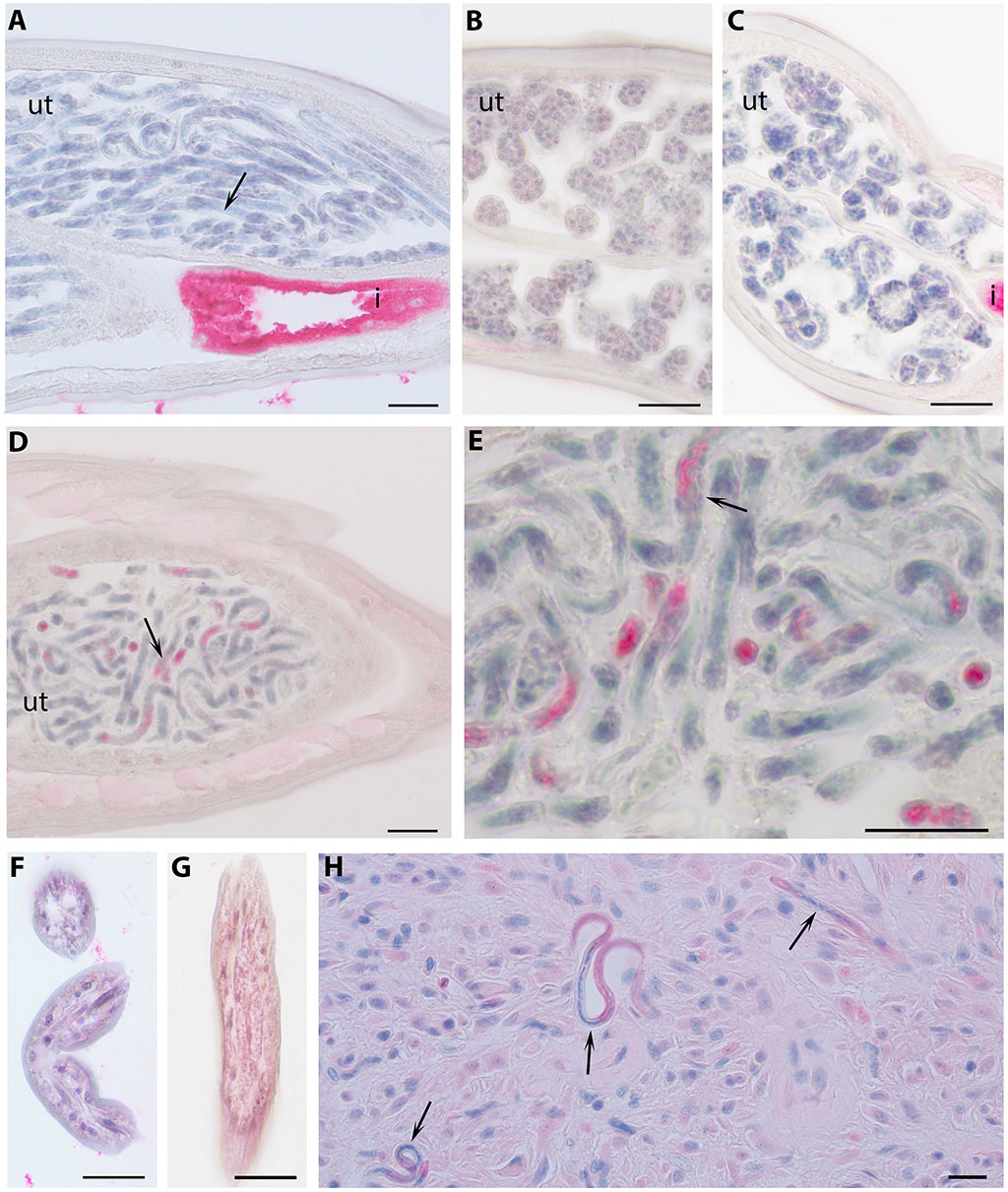
Infectious Disease Specialists at the Washington University School of Medicine (St Louis, MO, USA) report the discovery and characterization of a novel W. bancrofti antigen, Wb-Bhp-1, which is a homologue of the Brugia malayi protein used in antibody tests to monitor filariasis elimination in areas of Asia where LF is caused by Brugia species. The team used various techniques to study the antigen diagnostic potential, including cloning and expression, tissue fixation and immunohistochemistry, immunoblot analysis, and indirect ELISA. They tested sera or plasma from patients infected with W. bancrofti, B. malayi, Onchocerca volvulus and Loa loa. Slides were examined on an Olympus -BX40 microscope and photographed on an Olympus DP70 microscope digital camera (Olympus, Tokyo Japan).
The scientists reported that immunohistology showed that anti-Wb-Bhp-1 antibodies primarily bind to Mf. Plasma from 124 of 224 (55%) microfilaremic individuals had IgG4 antibodies to Wb-Bhp-1 by ELISA. Serologic reactivity to Wb-Bhp-1 varied widely with samples from different regions (sensitivity range 32%–92%), with 77% sensitivity for 116 samples collected from microfilaremic individuals outside of sub-Saharan Africa. The team screened sera from people infected with W. bancrofti, and 12 of 13 (92%) reacted with Wb-Bhp-1 by immunoblot. The scientists tested 224 sera from individuals with W. bancrofti microfilaremia collected in Sri Lanka, India, Papua New Guinea, Egypt and Côte d’Ivoire. They found that 124/ 224 (55%) sera had anti-Wb-Bhp-1 IgG4 ELISA titers above the threshold of 0.2 OD490, using a BioTek ELx808 plate reader (Agilent Technologies, Santa Clara, CA, USA).
The authors concluded that Wb-Bhp-1, a W. bancrofti homologue of BmR1, is a promising microfilarial antigen for diagnosis of bancroftian filariasis. Specificity testing showed that the Wb-Bhp-1 ELISA had low-level cross-reactivity with samples from people with onchocerciasis or loiasis. Wb-Bhp-1 serology may be especially useful in countries where the combination of ivermectin, diethylcarbamazine (DEC) and albendazole (IDA) can be used to accelerate LF elimination. The study was published on May 23, 2022 in the journal PLOS Neglected Tropical Diseases.
Related Links:
Washington University School of Medicine
Olympus
Agilent Technologies