Methods Discriminate Dengue Severity during Acute Infection
By LabMedica International staff writers
Posted on 03 Sep 2018
Dengue is the most widely distributed mosquito-borne human viral disease and represents a major public health burden globally. An estimated 390 million infections occur each year, of which around 100 million are symptomatic.Posted on 03 Sep 2018
Although prior infection with another viral serotype, such as secondary dengue, is known to be an important factor influencing disease severity, current methods to determine primary versus secondary immune status during the acute illness do not consider the rapidly evolving immune response, and their accuracy has rarely been evaluated against an independent gold standard.
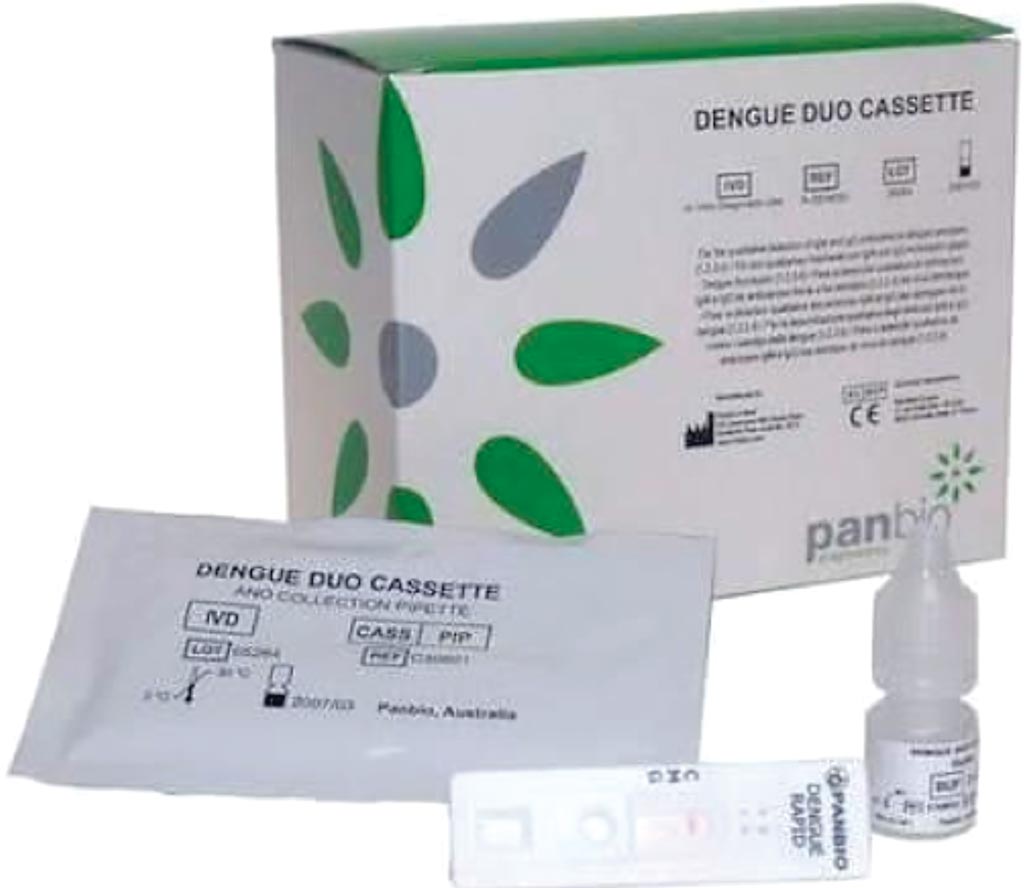
Image: The Panbio Dengue Duo Cassette can detect the high levels of IgG characteristic of secondary infections and IgM levels associated with primary dengue with high sensitivity and specificity (Photo courtesy of Alere).
An international team led working at the Hospital for Tropical Diseases (Oxford University Clinical Research Unit, Ho Chi Minh City, Vietnam) enrolled 293 laboratory confirmed dengue patients aged 5 to 25 years who had registered in one of several clinical studies carried out at the Hospital for Tropical Diseases. Daily plasma samples obtained during the acute illness were assayed using the Panbio anti-dengue indirect immunoglobulin-G (IgG) enzyme-linked immunosorbent assay (ELISA), as well as in-house anti-dengue IgG and IgM capture ELISAs. Plaque reduction neutralization tests (PRNTs) were performed six months after the acute illness episode to define immune status.
The scientists reported that cut-offs derived for the various parameters demonstrated progressive change (positively or negatively) by day of illness. Using these time varying cut-offs it was possible to determine whether an infection was primary or secondary on single specimens, with acceptable performance. The model using Panbio Indirect IgG responses and including an interaction with illness day showed the best performance throughout, although with some decline in performance later in infection. Models based on in-house capture IgG levels, and the IgM/IgG ratio, also performed well, though conversely performance improved later in infection.
The authors concluded that for all assays, the best fitting models estimated a different cut-off value for different days of illness, confirming how rapidly the immune response changes during acute dengue. The optimal choice of assay will vary depending on circumstance. Although the Panbio Indirect IgG model performs best early on, the IgM/IgG capture ratio may be preferred later in the illness course. The study was published on August 7, 2018, in the journal BMC Infectious Diseases.
Related Links:
Hospital for Tropical Diseases




Platinum Member

Automated Coagulation Analyzer
Hemolumi H6
Gold Member

Neonatal Heel Incision Device
Tenderfoot
New

Drug Testing Assays
Atellica DT 250 Analyzer
New

Portable POCT Blood Gas Analyzer
BD100