Increased Risk of HIV Associated with Parasitic Worm Infections
By LabMedica International staff writers
Posted on 18 Aug 2016
People infected with a parasitic worm called Wuchereria bancrofti in areas where human immunodeficiency virus (HIV) is endemic may be more likely to acquire HIV than people who are not infected with the worm.Posted on 18 Aug 2016
W. bancrofti is a mosquito borne parasitic worm or helminth and worldwide, it causes 90% of lymphatic filariasis cases, a disease commonly known as elephantiasis, which is a neglected tropical disease. Lymphatic filariasis currently affects 120 million people, mostly in Asia, Africa, the western Pacific, and parts of the Caribbean and South America, and causes abnormal enlargement of limbs, causing pain, severe disability and social stigma.
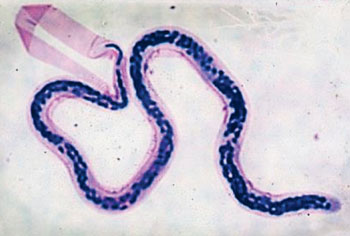
Image: A microfilaria of Wuchereria bancrofti in a thick blood smear stained with Giemsa (Photo courtesy of the CDC).
German and Tanzanian scientists led by those at the University of Munich Medical Centre (Germany) analyzed 2,699 people in the Kyela district of Mbeya, southwest Tanzania between 2006 and 2011. Samples of blood, urine, stool, and sputum were collected to test for HIV and for W. bancrofti infection, as well as for Schistosoma haematobium, intestinal helminths, tuberculosis, and malaria.
Participants with lymphatic filariasis were twice as likely to become infected with HIV as those without lymphatic filariasis. Overall, there were 1.91 new HIV infections per 100 person-years in patients with lymphatic filariasis, versus 0.80 new HIV infections per 100 person-years in patients without lymphatic filariasis. In the 1,055 initially HIV-negative adolescents and adults with clearly defined lymphatic filariasis status, 32 new HIV infections were observed in 2,626 person-years. Lymphatic filariasis status remained an independent and significantly relevant risk factor for HIV infection when controlled for other known risk factors such as sexual behavior and socioeconomic factors.
Inge Kroidl, the lead author of the study said, “W. bancrofti worms live in the lymphatic system of patients, often without symptoms, for years. The long disease duration of W. bancrofti infection of around 10 years creates an ongoing immune response, which we suspect might leave infected persons more susceptible to HIV infection. Our findings add another argument to push neglected diseases, in this case filarial infection, into the focus of global prevention strategies, as they create not only morbidity but in addition may generate an increased risk of acquiring HIV.” The study was published on August 3, 2016, in the journal The Lancet.
Related Links:
University of Munich Medical Centre




Platinum Member

Automated Coagulation Analyzer
Hemolumi H6

Gold Member

Platelet Function Analyzer
PL-12

New

Slide Scanner System
NanoZoomer S540MD

New
Gold Member

Serum Indices Control
Acusera Serum Indices Control