Plague Detected by Anti-Carbohydrate Antibodies
By LabMedica International staff writers
Posted on 07 Aug 2013
A diagnostic test for detecting the presence of Yersinia pestis, the cause of plague, may soon be easier than ever before. Posted on 07 Aug 2013
The presence of antibodies against a surface glycan in the blood of infected patients can be a biomarker of diagnostic value in Y. pestis infections.
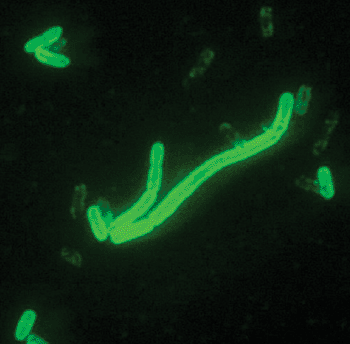
Image: Yersinia pestis, Direct Fluorescent Antibody Stain (Photo courtesy of Larry Stauffer).
A scientific team at the Max Planck Institute (Potsdam, Germany) developed a simple, inexpensive, and reliable method of detecting the bacterium. They identified and synthesized an oligosaccharide structure on bacterial surface before combining it with a protein to heighten the immunological effect. The presence of antibodies against this surface glycan in the blood of infected patients can be a biomarker of diagnostic value in Y. pestis infections. The scientists also used the antigen to create antibodies, which can directly detect the plague pathogen in infected samples.
The antibodies can identify plague bacteria with high selectivity and accuracy without the result being distorted by other bacteria biochemically related to plague, and therefore the scientists have effectively produced a quick test for this deadly disease. The glycan or its glycoconjugates can be applied to test strips where it acts as an antigen and catches antibodies from the blood of infected patients. The antigen-antibody complexes are very easy to detect with fluorescing proteins. The antibodies could provide a way of directly detecting the plague pathogen in infected tissue, by using fluorescing proteins to identify whether the antibodies have docked onto the bacterial surface. Antibody binding assays were performed using synthetic carbohydrate antigen-based microarrays and slides were scanned using a GenePix 4300A scanner (Bucher Biotec; Basel, Switzerland).
Peter H. Seeberger, PhD, Director at the Max Planck Institute of Colloids and Interfaces, said, “These reliable tests are simple and economical to administer. This gives the new approach major advantages over the testing methods used to date. In the past, plague pathogens were detected by phenotyping or gene testing. The problem with these methods is that they are complex, expensive, and slow, and, what's more, they have a high failure rate.” The study was published on July 10, 2013, in the journal Angewandte Chemie International.
Related Links:
Max Planck Institute
Bucher Biotec




Platinum Member

Automated Coagulation Analyzer
Hemolumi H6
Gold Member

NEW PRODUCT : SILICONE WASHING MACHINE TRAY COVER WITH VICOLAB SILICONE NET VICOLAB®
REGISTRED 682.9

New
Silver Member

Connectivity Solution
EKF Link

New

Slide Scanner System
NanoZoomer S540MD