West Nile Serological Tests Assessed for Accuracy
By LabMedica International staff writers
Posted on 20 May 2013
West Nile virus (WNV) infections have increased incrementally with sporadic outbreaks in the last decade, and a variety of serological tests is used for the diagnosis. Posted on 20 May 2013
Serological diagnosis of WNV infection can be performed by an enzyme-linked immunosorbent assay (ELISA), an immunofluorescence assay (IFA), a neutralization test (NT), and by the hemagglutination-inhibition assay.
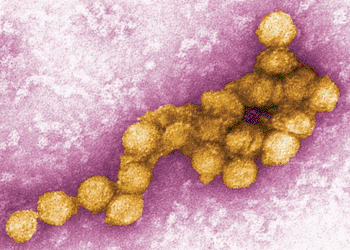
Image: Transmission electron micrograph of the West Nile virus (Photo courtesy of Cynthia Goldsmith).
Scientists at Robert Koch Institute (Berlin, Germany) working with a selected group of multinational laboratories organized the second external quality assurance (EQA) study for the serological diagnosis of WNV infection. The aim of this study was to collect updated information regarding the performance accuracy of WNV serological diagnostics.
A serum panel of 13 samples that included sera reactive against WNV, plus specificity and negative controls, was sent to 48 laboratories involved in WNV diagnostics. Forty-seven of 48 laboratories from 30 countries participated in the study. Only eight laboratories achieved 100% of concurrent and correct results. Of these eight tested panels, ELISA was performed in five, IFA in one and NT in two. In the other tested panels, the percentage of correct results varied from 54% to 92%.
No differences were observed in performances of in-house and commercial test used by the laboratories. IFA was significantly more specific compared to ELISA in detecting IgG antibodies. The overall analytical sensitivity was 50% and specificity was 95% for diagnostic tests for IgM detection. In comparison, the overall sensitivity was 86% and specificity was 69%, for diagnostic tests for IgG detection. The main obstacle in other laboratories to achieving similar performances was the cross-reactivity of antibodies amongst heterologous flaviviruses.
The authors concluded that there is still need to improve serological tests for WNV diagnosis. The low sensitivity of IgM detection suggests that there is a risk of overlooking WNV acute infections, whereas the low specificity for IgG detection demonstrates a high level of cross-reactivity with heterologous flaviviruses such as Dengue virus (DENV), Japanese encephalitis virus (JEV), Tick-borne encephalitis virus (TBEV), and Yellow fever virus. Due to the cross-reactivity with these flaviviruses, other diagnostic tests with heterologous flaviviruses should be performed to better identify false-positive results. The study was published on April 25, 2013, in the journal Public Library of Science Neglected Tropical Diseases.
Related Links:
Robert Koch Institute




Platinum Member

Automated Coagulation Analyzer
Hemolumi H6
Gold Member

Electrolyte Analyzer
CBS-4000 (CBS-400)

New

Gastrointestinal Panel
Xpert® GI Panel
New

Neurofilament Light Chain Assay
Lumipulse G NfL Blood