Commercial Assays Detect Fungal DNA in Bronchoalveolar Lavage
By LabMedica International staff writers
Posted on 23 Apr 2012
The performance of two commercially available molecular assays for the detection of Aspergillus and Pneumocystis DNA has been investigated. Posted on 23 Apr 2012
The assays are based on real-time polymerase chain reactions (PCR), were tested on bronchoalveolar lavage fluid, and were compared to reference diagnostic tests, including culture, and additional molecular analysis by real-time PCR, nested PCR, and sequencing was also performed.
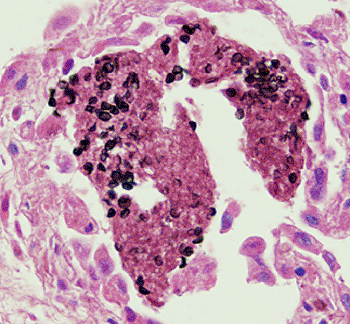
Image: Cysts of Pneumocystis jirovecii in lung tissue (Photo courtesy of US Centers for Disease Control).
At the University of Modena and Reggio Emilia (Italy) 20 patients were retrospectively enrolled in a study and clustered into three groups: seven patients with invasive aspergillosis group (IA), eight patients Pneumocystis jirovecii pneumonia (PCP), and five patients acted as a negative control group. Twenty-one samples were obtained from direct bronchoalveolar lavage (BAL) procedures required for clinical assessment, while one sample was obtained by lung biopsy.
Fungal DNA was extracted from the samples using the MycXtra Fungal DNA Extraction Kit and assessed by the MycAsp Assay and by MycPCP Assay, all of which are products of Myconostica (Cambridge, UK). The real-time PCR (RT-PCR) was carried out on the ABI 7300 platform. The Platelia Aspergillus commercial galactomannan enzyme-linked immunosorbent assay (GM-ELISA, Bio-Rad Laboratories; Hercules, CA, USA) and the MeriFluor Pneumocystis, immunofluorescence assay (Meridian Bioscience; Cincinnati, OH, USA) were also performed.
All the IA patients were MycAsp Assay positive, whereas 12 non-IA patients returned negative PCR results and, 7 of 8 PCP patients were MycPCP Assay positive, while 9 non-PCP patients were PCR negative. The results of the study provide the first evidence on the efficacy of the MycAsp Assay and MycPCP Assay in discriminating between BAL positive and BAL negative for Aspergillus or Pneumocystis DNA, when using the ABI 7300 platform (Applied Biosystems; Foster City, CA, USA).
The authors concluded that the study provides a step forward towards the inclusion of molecular methods in the routine assessment of biological samples, especially from critical patients in whom rapid and sensitive approaches are needed to fulfill a prompt and precise diagnosis. The study was published online on April 16 2012 in the journal Diagnostic Microbiology and Infectious Disease.
Related Links:
University of Modena and Reggio Emilia
Myconostica
Bio-Rad Laboratories



Gold Member

Automatic Hematology Analyzer
CF9600


Japanese Encephalitis Test
Japanese Encephalitis Virus Real Time PCR Kit

New

Automated Coagulation Analyzer
Hemolumi H6