Program Will Improve Blood-Drawing Practices in Africa
By LabMedica International staff writers
Posted on 29 Jun 2010
A joint, multiyear initiative to improve blood collection practices in African clinics and hospitals has been initiated.Posted on 29 Jun 2010
The program is designed to protect both health workers and patients in countries severely impacted by the human immunodeficiency virus (HIV)/AIDS pandemic by improving blood collection practices. The initiative ultimately aims to support training for thousands of healthcare workers in sub-Saharan Africa, tracking hundreds of thousands of blood draws per year within each participating country.
In addition, the program will help prevent needlestick injuries by establishing or enhancing needlestick injury surveillance, which will help to identify people in need of life saving post-exposure prophylaxis and correct practices that pose risks to health workers and patients.
Becton, Dickinson and Company (BD; Franklin Lakes, NJ, USA) a leading global medical technology company, and the U.S. President's Emergency Plan for AIDS Relief (PEPFAR) through the U.S. Department of Health and Human Services' Centers for Disease Control and Prevention (CDC; Atlanta, GA, USA) have collaborated to set the joint initiative in motion.
The three-year initiative, which may be extended for up to two additional years, has begun in Kenya under the leadership of the Kenyan Ministries of Health (Nairobi, Kenya) through the National AIDS and STI Control Program. Kenyan health workers will be trained as master trainers in safe blood draw practices. These master trainers will later lead trainings in regions throughout the country. Instructors and trainers from the Kenya Medical Training College (KMTC; Nairobi, Kenya) will participate in the trainings, and help to integrate the information from the program into the College's health-worker training curriculum.
As part of the initiative, BD is funding construction of incinerators at two Kenyan sites to improve their medical waste management. Combined, these efforts will enhance the goal of the Kenya National HIV/AIDS Strategic Plan (KNASP-III) to eliminate HIV transmission in healthcare settings by 2013.
The initiative will expand to include up to four additional PEPFAR-supported countries. PEPFAR and BD are working on the ground with Ministries of Health, national reference laboratories, and various implementing partners. In each participating nation, a technical working group--consisting of the Ministry of Health, CDC, and BD--is developing tailored policies, guidelines, and standard operating procedures for blood drawing and specimen handling.
Related Links:
Becton, Dickinson and Company
U.S. President's Emergency Plan for AIDS Relief
U.S. Department of Health and Human Services' Centers for Disease Control and Prevention
Kenyan Ministries of Health
Kenya Medical Training College




Platinum Member

Automated Coagulation Analyzer
Hemolumi H6
Gold Member

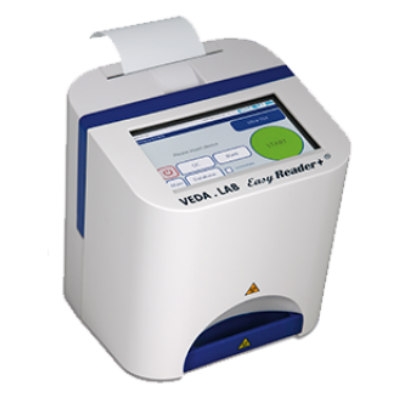
Quantitative POC Immunoassay Analyzer
EASY READER+
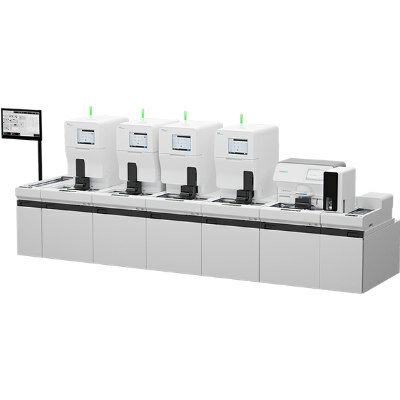

Automated Urinalysis Solution
UN-9000
New

Slide Scanner System
NanoZoomer S540MD