Microbial Saliva Test Could Help Triage Esophageal Cancer Risk
Posted on 21 May 2026
Esophageal squamous cell carcinoma (ESCC) is highly lethal, partly because many patients are diagnosed only after swallowing becomes difficult and treatment options are largely palliative. The disease is concentrated in a high-incidence belt extending from parts of China and Iran down the eastern side of Africa, but its underlying causes remain incompletely understood. In 2020, esophageal cancer caused more than 540,000 deaths worldwide. New findings now suggest that microbial signatures in saliva may help identify ESCC earlier.
At the Sydney Brenner Institute for Molecular Bioscience (SBIMB) at Wits University (Johannesburg, South Africa), investigators evaluated whether the oral microbiome could serve as a low-cost triage signal for ESCC. The approach profiles bacteria in saliva and applies machine-learning algorithms to distinguish patients with ESCC from unaffected controls. While not intended to replace endoscopy or to function as an early cancer-detection test at this stage, the concept is positioned as a potential tool to prioritize referrals in high-risk communities.
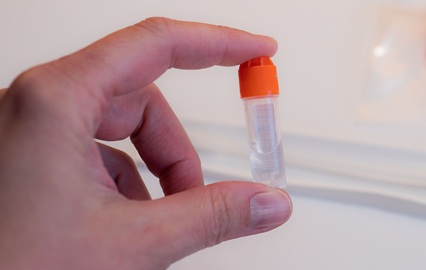
A newly published study in Communications Medicine, conducted by SBIMB in collaboration with Columbia University in New York, reported clear differences between the saliva microbiota of ESCC patients and controls. Using genetic sequencing of bacteria combined with machine learning, the team developed a microbiome-based model that outperformed a comparator built solely from clinical and demographic variables. Several taxa were more abundant in ESCC, including Fusobacterium nucleatum. The model has been internally validated and will require testing in external cohorts.
Analyses drawing on the Johannesburg Cancer Study reaffirmed that smoking and heavy alcohol use remain important risks, alongside factors such as rural residence, lower educational attainment, and use of biomass or other household fuels. However, these exposures do not fully explain the number of cases, geographic clustering, or why some individuals develop ESCC without obvious risk factors. Researchers note that microbial patterns can vary by geography, diet, environment, and population, underscoring the need for broader validation.
Next steps include enrolling new cohorts spanning confirmed ESCC cases, individuals with benign esophageal conditions that also cause dysphagia, and healthy population controls. This work aims to determine whether the saliva signal can distinguish cancer from non-cancerous obstruction or whether it is better understood as a general warning sign of esophageal abnormality. Additional efforts will integrate epidemiology, genomics, microbiome science, environmental exposure assessment, and community engagement.
"We found clear differences between the saliva bacteria of people with esophageal squamous cell carcinoma and unaffected controls. Using genetic sequencing of bacteria and machine-learning methods, the team identified a distinctive microbial pattern associated with the cancer," said Wenlong Carl Chen, researcher at the Sydney Brenner Institute for Molecular Bioscience (SBIMB) at Wits University.
Related Links
Sydney Brenner Institute for Molecular Bioscience (SBIMB) at Wits University