Lung Cancer Atlas Reveals Cellular Patterns Associated With Patient Prognosis
Posted on 17 Nov 2026
Lung cancer is a leading cause of cancer-related death worldwide and is characterized by substantial cellular heterogeneity. Even within a single tumor, cancer cells can vary in aggressiveness, while immune, connective tissue, and blood vessel cells influence the tumor microenvironment. Conventional classification based on tumor size and lymph node involvement may not fully capture this complexity. To improve understanding of these differences, researchers have developed a single-cell lung cancer atlas that uses AI to link cellular characteristics with clinical outcomes.
Researchers at LMU Munich, Charité University Hospital Berlin, and the Berlin Institute for the Foundations of Learning and Data at the Technical University of Berlin developed LuCaS+, a single-cell atlas of lung cancer. The atlas uses single-cell RNA sequencing to measure gene activity in individual cell nuclei from archived tumor tissue. Machine learning methods were then applied to identify distinct populations of cancer cells, immune cells, connective tissue cells, and blood vessel cells associated with clinical outcomes.
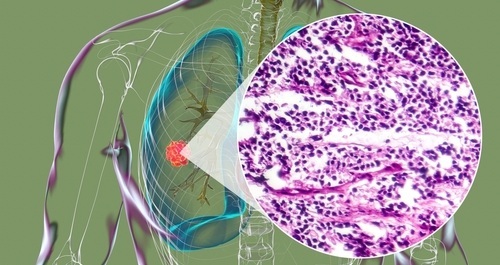
The study analyzed tumor samples from 454 lung cancer patients, capturing gene activity in more than 2.5 million individual cells. Researchers measured the activity of more than 2,000 genes per cell nucleus and linked these molecular profiles to clinical histories with long-term follow-up data. This approach enabled the team to assess the metastatic potential of different tumor cell populations and validate the findings in an independent patient cohort.
By combining molecular characteristics of cancer cells with those of their surrounding microenvironment, researchers developed a predictive model that significantly outperformed conventional clinical parameters. The model identified patients at higher risk of relapse than traditional assessments suggested, as well as those with more favorable prognoses. These findings highlight the potential of single-cell profiling and AI to improve lung cancer risk stratification and support more personalized treatment decisions.
Published in Nature Cancer on November 12, 2026, the LuCaS+ atlas is freely available to researchers investigating new therapeutic approaches. The resource could help identify potential treatment targets and guide future studies, although proposed therapies will require further validation in cell culture and animal models.
“For the LuCaS+ atlas, our team analyzed tumor tissue from 454 lung cancer patients. To do this, we used a method that had rarely been used before on this scale: With the help of single-cell RNA sequencing, we were able to read out the activity of over 2,000 genes per cell nucleus from archived tissue samples and thus draw on clinical histories with long follow-ups,” said Frederick Klauschen, Director of LMU’s Institute of Pathology.
“When working with millions of cells, classical evaluation methods come up against their limits. Our machine learning methods, by contrast, recognize even the tiniest differences between individual cell types. This makes it possible to link these patterns directly to the clinical outcomes of the respective patients,” said Klaus-Robert Müller, BIFOLD director and professor at TU Berlin.
Related Links
LMU’s Institute of Pathology