Longitudinal Blood Testing Reveals Changes in Allergen Sensitization During Childhood
Posted on 19 Oct 2026
Food allergy is a major childhood health concern, and distinguishing persistent risk from transient sensitization can guide clinical decisions. Specific IgE antibodies may be detectable even when a child has no symptoms after eating the implicated food, complicating interpretation. Yet detailed North American data on how these antibody responses change during early childhood have been limited.
To better characterize these changes, a new study tracked IgE sensitization patterns between infancy and age 5. The analysis focused on responses to allergen extracts and individual allergen components, assessing sensitization rather than confirmed clinical allergy. This longitudinal approach allowed the team to examine whether sensitization persisted, disappeared, or emerged later in childhood.
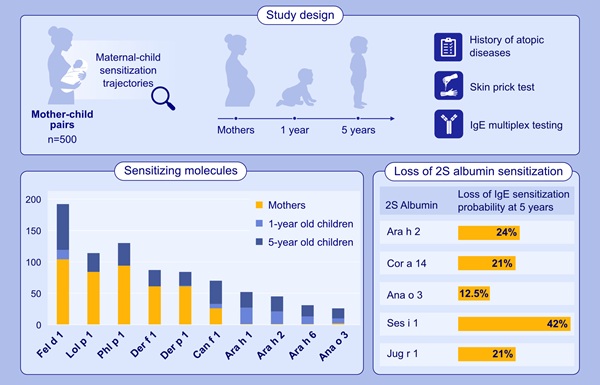
The researchers analyzed samples from 500 mother-child pairs enrolled in the Canadian CHILD Study, with blood collected from mothers during pregnancy and from children at ages 1 and 5. Testing covered approximately 300 allergen extracts and individual components, allowing the team to characterize how sensitization changed during early childhood.
Specific IgE sensitization was detected in 25.3% of children at age 1, rising to 40.4% by age 5. Egg and peanut were among the main food sensitizers in infancy, while peanut and tree nuts predominated at age 5. Over the same period, sensitization to environmental allergens, including cats, dogs, house dust mites, and grass pollen, also became more common.
Within these broader changes, peanut and tree nut sensitization followed distinct trajectories. Approximately half of children sensitized to major peanut components at 12 months remained sensitized at age 5. In contrast, sensitization to important components of cashew, hazelnut, walnut, and pistachio often emerged later in childhood.
Other responses diminished over time, with approximately one in four children losing sensitization to important 2S albumins during the four-year period. These proteins include major allergen components of peanut, tree nuts, and sesame and serve as useful markers for food allergies associated with systemic reactions.
Published in Allergy on September 16, 2026, the study involved the Department of Pediatric and Adolescent Medicine at University Hospital St. Pölten, a teaching and research site of Karl Landsteiner University of Health Sciences (Krems an der Donau, Austria), alongside Canadian universities and pediatric research centers, including the Hospital for Sick Children (SickKids; Toronto, Canada).
The authors emphasized that oral food challenges were not performed to confirm clinical food allergy. The observed loss of sensitization therefore does not mean that one in four children outgrew an established food allergy.
“Especially in young children, a positive allergy test is not necessarily the end of the story. We need to know whether a sensitization persists, disappears or develops later. Looking at individual allergen components gives us valuable information for discussing risks and treatment options with families,” said Thomas Eiwegger, head of the Department of Pediatric and Adolescent Medicine at University Hospital St. Pölten.
Related Links
Department of Pediatric and Adolescent Medicine at University Hospital St. Pölten
Hospital for Sick Children