Statistical Model Helps Track T Cell Behavior During Cancer Immunotherapy
Posted on 20 Nov 2026
T cells play a central role in cancer immunotherapy, but their behavior can vary considerably, contributing to inconsistent treatment responses. While some T cells activate effectively, others become inactive or lose their ability to respond. Although T cell receptor clonality can indicate an anticancer immune response, cells with seemingly appropriate receptors may still fail to function. To better understand these differences, researchers have developed a computational method to measure and predict T cell behavior during immunotherapy.
Researchers at Memorial Sloan Kettering Cancer Center (MSK; New York, NY, USA) developed TCRi (T cell receptor information), a statistical model designed to monitor T cell responses to immunotherapies, including therapeutic cancer vaccines. The approach links the genetic identity of individual T cell receptors with the biological states of their corresponding cells, allowing researchers to investigate how receptor sequences influence T cell behavior and how these relationships change during immunotherapy.
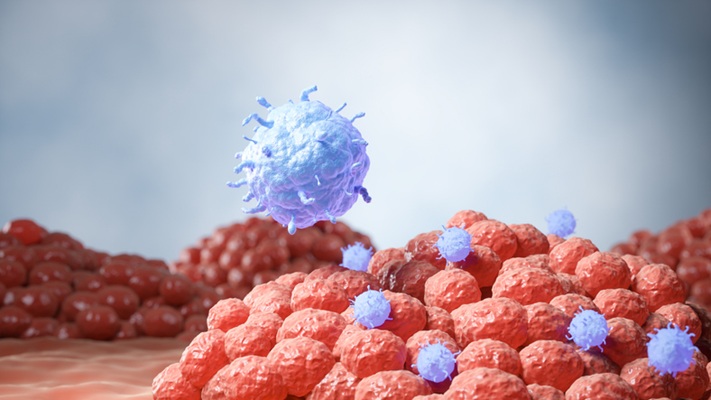
TCRi combines information theory with single-cell analysis to examine two key characteristics of individual T cells. The first is the genetic sequence of the T cell receptor, which determines what the cell can recognize. The second is its gene expression profile, which reflects its functional state, such as active, exhausted, or naive. By analyzing these characteristics together, the model provides insights into the relationship between T cell identity and function.
Researchers applied the model to data from more than 167,000 T cells collected from cancer patients treated with immune checkpoint inhibitors. They found that T cells from nonresponders exhibited a stronger association between receptor clonotype and functional phenotype, a pattern already present before treatment that often became more pronounced after therapy began. In contrast, responders showed a weaker association before treatment, suggesting greater flexibility in T cell states that may enable more effective immune responses following immunotherapy.
The findings were published in Nature Genetics on November 5, 2026. The work involved MSK and the Olayan Center for Cancer Vaccines at MSK. The article also notes that TCRi has been used at MSK to monitor patient responses to vaccines, including an investigational personalized pancreatic cancer vaccine.
“This approach produces a standardized measurement that lets us compare results across different studies and clinical trials,” said Benjamin Greenbaum, Ph.D., computational biologist and co-director of neoantigen discovery at the Olayan Center for Cancer Vaccines at MSK. “We have a way to learn from this data what a meaningful T cell response to an immunotherapy looks like—or doesn't.”
“This tool offers a way to get a much clearer picture of what is biologically meaningful in T cell behavior,” said Greenbaum
Related Links
Memorial Sloan Kettering Cancer Center