


Genome Sequencing Provides Clues to Unexplained Recurrent Miscarriages
Posted on 20 Nov 2026
Recurrent pregnancy loss, defined as two or more miscarriages, affects about 5% of couples. In many cases, routine evaluation does not identify a cause, particularly when pregnancies have a normal chromosome number and prenatal ultrasound shows no structural abnormalities. Approximately 70% of recurrent pregnancy loss cases are chromosomally normal, leaving many families without a clear explanation. New findings now suggest that genome sequencing may help identify possible genetic causes in some of these cases.
Researchers at Stanford Medicine, the University of California San Francisco, and collaborating institutions used genome sequencing to analyze parents and miscarried pregnancies from families with recurrent, chromosomally normal pregnancy losses. The approach was designed to distinguish inherited genetic changes from variants that arose in the embryo and to help differentiate potentially harmful variants from benign ones.
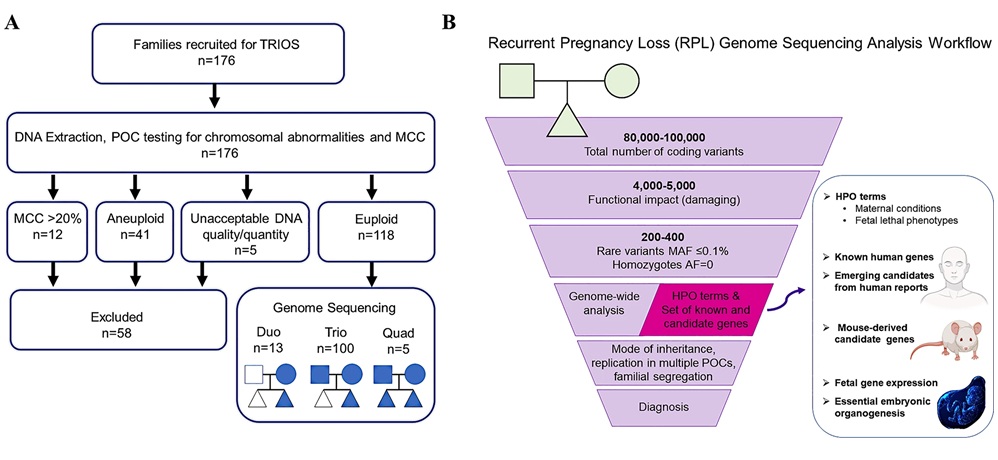
The team focused on genes associated with lethal conditions in stillborn babies and newborns, genes linked to prenatal death in mice, and whether those genes were active in the embryo or fetus around the time of pregnancy loss.
The study enrolled 176 families between 2022 and 2024, with 118 remaining after samples with chromosome abnormalities or poor-quality DNA were excluded. About 79% of the losses occurred during the first trimester, and 95% of pregnancies had no structural abnormalities detected on prenatal ultrasound. Investigators identified possible genetic explanations in 30 of the 118 families, including pathogenic or likely pathogenic variants in 18 families and variants of uncertain significance in 12.
Most of the identified variants were inherited, with at least one parent carrying the variant in 24 of the 30 families, usually without showing symptoms. The most common pattern, observed in 11 families, involved damaging variants affecting both copies of a single gene. Other patterns included X chromosome variants inherited by male embryos, parental mosaicism involving eggs or sperm, and single inherited damaging variants that appeared sufficient to cause pregnancy loss in some families.
Overall, the researchers identified variants in 28 genes, including 13 previously associated with fetal or newborn death and 15 not previously reported in pregnancy loss. The study was published in Genome Medicine on November 16, 2026. The researchers said that sequencing parents and miscarried pregnancies could eventually supplement standard chromosome testing, while cautioning that variants of uncertain significance and newly proposed genes should not be used to guide embryo selection or other medical decisions until additional evidence is available.
“Some of these families have had 10 or more miscarriages, and some of them have no living children, without any explanation. They have been told over and over again: 'It's bad luck. Try again.' We were not satisfied with the lack of explanation. This study is an opportunity for us to begin to understand why and to act on that,” said Svetlana Yatsenko, M.D., professor of pathology at Stanford Medicine.
Related Links
Stanford Medicine
UC San Francisco