Epigenetic Blood Test Detects Early Breast Cancer and Predicts Recurrence Risk
Posted on 17 Nov 2026
Breast cancer screening can reduce mortality, but early detection remains challenging when tumors are small or difficult to identify through imaging. Blood-based liquid biopsies offer a potential complementary approach, although early-stage cancers often release limited genetic material, making accurate detection difficult. Assessing the risk of recurrence after treatment presents an additional challenge, highlighting the need for more sensitive blood-based diagnostic tools.
Researchers at the Hebrew University of Jerusalem, in collaboration with the Weizmann Institute of Science, Kaplan Medical Center, and Sheba Medical Center, developed a blood test that detects epigenetic signatures associated with breast cancer. The method analyzes circulating nucleosomes, fragments of DNA wrapped around proteins that are released into the bloodstream when cells die. Using single-molecule microscopy and fluorescent labeling, the technology measures multiple epigenetic markers across millions of nucleosomes to identify cancer-associated patterns.
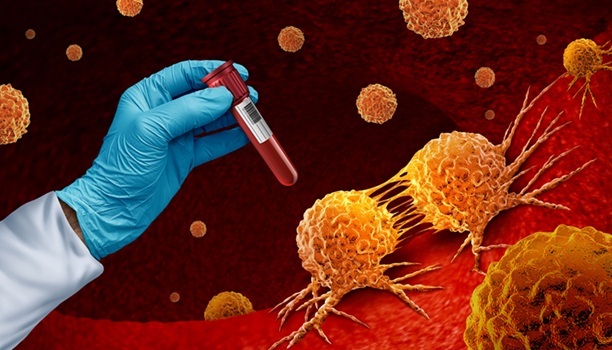
The study initially examined epigenetic signatures in breast tumors from 12 women scheduled for surgical removal. Researchers then applied the blood-based approach to samples from 77 breast cancer patients followed for at least five years at Mayo Clinic in Florida, alongside 30 healthy women. Artificial intelligence models trained on these measurements distinguished women with early-stage breast cancer from healthy controls with 95% accuracy, including cases in which tumors were confined to the breast and measured no more than 2 centimeters.
The analysis was subsequently expanded to 188 patient blood samples with support from Sheba and Kaplan medical centers. The test demonstrated similar performance across different breast cancer types and breast densities. Researchers also identified a rare population of highly aggressive, invasive tumor cells with a distinct epigenetic signature, including in cancers not otherwise classified as particularly aggressive.
The presence of this aggressive-cell signature in blood was associated with an increased risk of recurrence. By combining it with additional epigenetic markers, the test distinguished patients who experienced cancer recurrence during follow-up from those who remained recurrence-free with 81% accuracy. Published in Nature, the findings suggest that blood-based epigenetic profiling could support earlier breast cancer detection and more personalized recurrence risk assessment.
“Breast cancer screening saves lives. Regular mammograms reduce the risk of dying from the disease by 22%, but the denser the breast tissue, the easier it is for a tumor to 'hide' in the image. Our blood test showed strong diagnostic performance regardless of breast density. It performed just as well across different types of breast cancer, and also when we expanded the number of patient blood samples to 188 with the help of Sheba and Kaplan Medical Centers,” said Efrat Shema of the Weizmann Institute of Science.
“When we looked for their epigenetic signature in blood samples, we found that the more prevalent it was, the greater the risk that the disease would come back,” said Guy Ron of the Hebrew University of Jerusalem.
Related Links
Hebrew University of Jerusalem
Weizmann Institute of Science