


Skin Swab Research Identifies Metabolic Changes Linked to Parkinson’s Disease
Posted on 16 Nov 2026
Parkinson’s disease can be difficult to diagnose before movement symptoms appear, highlighting the need for earlier detection methods. Researchers have explored whether metabolic changes in sebum, the oily substance that protects the skin, could provide measurable indicators of the disease. Inspired by observations of a distinctive odor in people with Parkinson’s, researchers have developed a skin swab approach that identifies a chemical signature associated with the condition.
Researchers at the University of Manchester developed a skin swab method in collaboration with the Manchester Institute of Biotechnology, the University of Edinburgh, Salford Royal, Wythenshawe Hospital, SebOMIX, Parkinson’s UK, and the Defence Science and Technology Laboratory. The approach uses simple swabs to collect sebum from oil-rich areas of the skin, followed by mass spectrometry to identify and quantify molecules that may provide biological signatures associated with Parkinson’s disease.
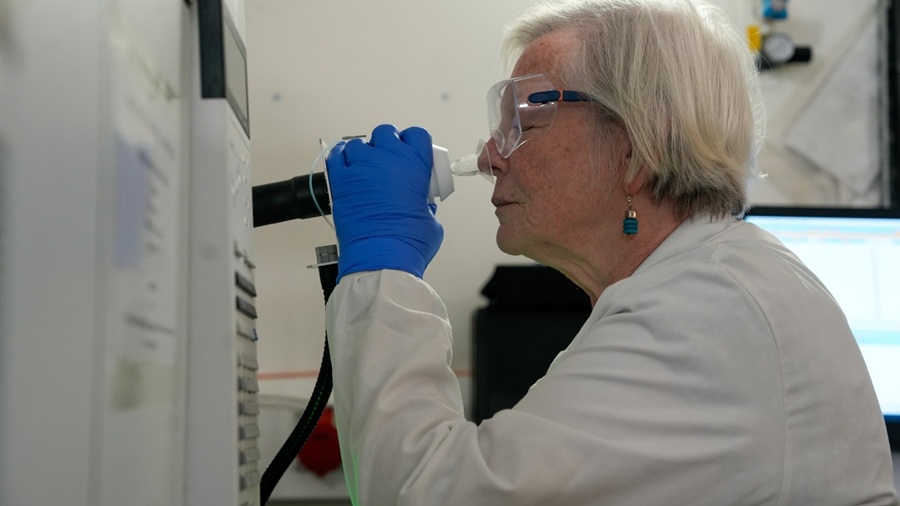
The research began after Joy Milne, a retired nurse with hyperosmia, or a heightened sense of smell, noticed a distinctive odor in people with Parkinson’s disease. In an initial blinded study using T-shirts, she correctly identified samples from people with Parkinson’s disease and observed that the odor was strongest in sebum-rich areas, particularly the back of the neck and between the shoulders. Notably, one participant initially classified as a healthy control whom she identified by the distinctive odor was later diagnosed with Parkinson’s.
The skin swab method can detect about 15,000 molecular features, with approximately 10% consistently differing in abundance between people with and without Parkinson’s. Researchers identified a distinct chemical signature that included changes in lipid metabolism and essential amino acids. The team has now sampled more than 7,000 participants worldwide and consistently detected the signature across different ages, ethnicities, and sampling locations.
SebOMIX is seeking investment for a Greater Manchester trial that would include about 400 people with suspected Parkinson’s referred by general practitioners and about 400 people with other symptoms such as dementia. Wythenshawe Hospital clinical biochemists would analyze blinded swabs with the Manchester Institute of Biotechnology team. If the clinical laboratory reproduces the research findings, the results would support regulatory approval and laboratory accreditation processes involving the MHRA and UKAS.
“We now want to translate this lab-based diagnostic into something that can be used routinely in clinic to diagnose and better understand this awful condition,” said Professor Perdita Barran, who leads the Michael Barber Center for Collaborative Mass Spectrometry at the Manchester Institute of Biotechnology.
Related Links
University of Manchester
Manchester Institute of Biotechnology