Blood Protein Signatures May Predict Brain Vessel Damage and Cognitive Decline
Posted on 10 Nov 2026
Cerebrovascular disease damages blood vessels in the brain and can contribute to tissue injury, microbleeds, white matter damage, stroke, cognitive decline, and dementia. Identifying people at higher risk remains difficult, particularly before substantial brain damage or cognitive impairment develops, and research in Asian populations has been limited. New findings now suggest that blood protein signatures may help predict worsening brain and cardiovascular health outcomes.
Researchers at the Yong Loo Lin School of Medicine, National University of Singapore (NUS Medicine; Singapore), identified four blood proteins that could potentially help identify people at higher risk of worsening cerebrovascular disease, cognitive decline, serious cardiovascular and cerebrovascular events, and mortality. The study used large-scale blood protein profiling to investigate biological signals associated with damage to blood vessels in the brain. The findings were published in Alzheimer’s & Dementia: The Journal of the Alzheimer’s Association.
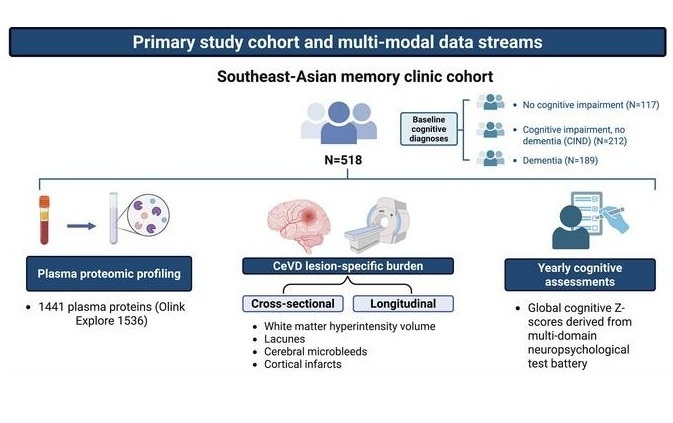
The researchers analyzed more than 1,400 proteins in blood samples from two Singapore-based research cohorts. In the first cohort, 518 participants from a Singapore memory clinic underwent blood protein profiling, brain MRI scans, and cognitive assessments. The team compared protein levels with different types of cerebrovascular lesions, including white matter hyperintensities, lacunes, cerebral microbleeds, and cortical infarcts.
Repeat brain imaging over time allowed the researchers to identify protein patterns associated with both existing cerebrovascular disease and its progression. These signatures were linked to biological processes including inflammation, immune responses, cell adhesion, and blood clotting. The identified protein signatures were then evaluated in an independent Singaporean cohort, where the proteins were also associated with mortality.
The findings suggest that blood-based biomarkers could eventually complement brain imaging and clinical risk factors to identify people at greater risk of cerebrovascular disease, cognitive decline, and future cardiovascular and cerebrovascular events. Further validation is needed before the findings can be applied in clinical practice. The researchers also plan to investigate the biological roles of the proteins and their potential use in future treatments or multi-marker tests for earlier and more personalized risk assessment.
“Cerebrovascular disease is an important contributor to cognitive decline and dementia, particularly in our Asian population. By identifying blood proteins linked to changes in the brain and future cognitive and cardiovascular outcomes, we hope to move towards more precise ways of identifying people at risk and intervening earlier,” said Professor Christopher Chen, Deputy Chair of the Healthy Longevity Translational Research Programme at NUS Medicine.
“By studying more than 1,400 proteins simultaneously and mapping them against MRI changes over several years, we gained a broader picture of the biological processes associated with cerebrovascular disease and identified proteins linked to both current disease and future health outcomes,” said Dr. Sim Ming Ann, first author of the study and PhD student at the Healthy Longevity Translational Research Programme at NUS Medicine and Memory Ageing & Cognition Centre, National University Health System.
Related Links:
NUS Medicine