Extracellular Vesicle Biomarkers Reveal Shared Signals in Aging and Cancer
Posted on 10 Nov 2026
Cellular communication changes during aging and cancer, making it difficult to distinguish normal biological adaptation from disease-associated signaling. In cancer, tumor-derived messages can alter surrounding tissues, while senescent cells may release signals linked to inflammation and impaired tissue repair. To better understand these overlapping processes, researchers are examining how extracellular vesicles may reveal molecular pathways shared between aging and cancer.
Researchers at the University of Lethbridge (Alberta, Canada) examined extracellular vesicles (EVs), including exosomes, microvesicles, and apoptotic bodies, as lipid-bound nanoparticles secreted by most cell types. Their review, titled “Extracellular vesicles in health, aging and disease,” was published in Volume 13 of Oncoscience on September 30, 2026. It examines how these particles carry molecular messages between cells and contribute to normal biological functions, aging, and cancer.
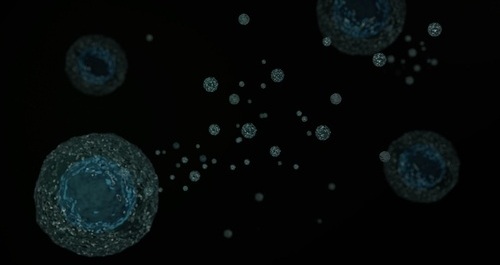
EVs facilitate cellular communication by transporting proteins, lipids, and genetic material between cells. Under normal conditions, they contribute to tissue repair, immune regulation, and cellular balance. Their molecular contents can change in response to stress, inflammation, and disease, potentially altering how neighboring cells behave.
The review gives particular attention to exosomes, one of the most extensively studied EV subtypes. In aging tissues, senescent cells release exosomes containing inflammatory molecules and regulatory microRNAs (miRNAs) that can influence gene expression in surrounding cells. These signals may contribute to chronic inflammation, impaired tissue repair, and other biological changes associated with aging.
In cancer, tumor-derived exosomes can carry molecules that promote cancer-cell survival and reshape the surrounding tissue environment. Research discussed in the review indicates that these particles can contribute to immune evasion, blood vessel formation, metastasis, and treatment resistance. The authors also identify molecular features shared by exosomes released from aging and cancer cells, including inflammatory signals, stress-related proteins, and genetic material.
The review concludes that the biological effects of exosomes depend largely on their cell of origin and the surrounding environment. Because their molecular contents can reflect changes in cellular health, exosomes are being investigated as potential biomarkers of aging and disease. Their ability to transport biological molecules has also generated interest in their use for targeted drug delivery, although further research is needed to determine their clinical potential.
Related Links
University of Lethbridge