New Breath Condensate Testing Approach Enhances Reliability for COPD Monitoring
Posted on 06 Nov 2026
Chronic obstructive pulmonary disease (COPD) is a progressive lung condition that can increasingly impair breathing over time. Diagnosis and monitoring may be burdensome because patients often require blood tests or costly imaging such as CT scans, while flare-ups can occur unexpectedly and worsen rapidly. To support less invasive monitoring, researchers have developed a new approach designed to improve the reliability of exhaled breath condensate testing.
Engineers at the University of Notre Dame are studying exhaled breath condensate (EBC) measurement as a noninvasive approach for monitoring pulmonary disease. EBC testing collects and cools a patient’s exhaled breath, then analyzes the resulting liquid condensate for biomarkers. The method uses affordable, portable point-of-care equipment and could reduce reliance on blood draws in both clinical and remote settings.
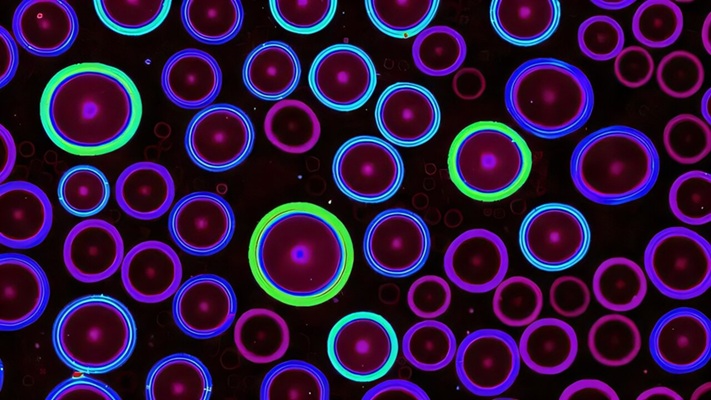
A major challenge has been poor consistency between repeated EBC measurements. Rather than attributing this variation mainly to biological differences, the research team investigated whether physical phase changes during sample collection contribute to biomarker loss. The work focused on co-condensation, which influences how biomarkers enter droplets as they form, and evaporation, which determines how much target compound is lost to the air during collection and processing.
Using a custom-built fluorescence measurement platform, the researchers visualized droplet-level transport during EBC sampling. The study, published in Nano Letters, showed that EBC droplets can lose substantial biomarker content within a single breath cycle because of evaporation. The team developed a mathematical model to quantify biomarker loss in individual droplets and then extended it to the larger droplet population expected on a condenser surface.
Experiments designed to mimic patient sample collection showed that droplet size played a major role in biomarker loss. Longer pauses between breaths were also associated with greater evaporative losses. Ambient temperature, humidity, and collection plate temperature were identified as additional variables for further study as the researchers work toward more standardized and reproducible EBC collection.
“This is a promising first step, demonstrating that there are concrete and measurable sources of error in EBC collection shows us that we have a shot at creating a standardization system that allows clinicians to reliably use EBC in disease diagnosis. The next step in that process is to separate the different parameters that control the variation so that we can create that system,” said Amio Ritwik, doctoral student in the Interfacial Thermofluids Laboratory and lead author of the paper.
Related Links
University of Notre Dame