New ddPCR Assays Broaden Options for Multiplex Cancer Mutation Research
Posted on 05 Nov 2026
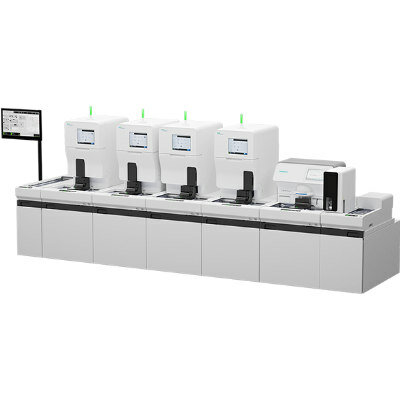
Bio-Rad Laboratories (Hercules, CA, USA) has expanded its precision oncology research portfolio for the QX700 ddPCR systems with two new additions: the QX700 ddPCR EGFR Exon 19 Deletions Screening Kit and the QX700 ddPCR KRAS G12/G13 Screening Kit. Optimized for the platform, the kits are designed to support research involving EGFR and KRAS mutations across multiple solid tumor applications. The expanded menu supports mutation detection research, liquid biopsy workflows, tumor-informed assay development, molecular residual disease (MRD) research, and multiplex biomarker analysis.
Bio-Rad’s Dark Probe Mutation Detection Assays, which are compatible across the company’s QX system portfolio, are designed to replace the wild-type fluorescent probe used in existing ddPCR workflows. The quencher-only dark probes suppress wild-type background while freeing an additional detection channel, allowing analysis of up to four mutation targets in a single well and reducing sample-volume requirements.
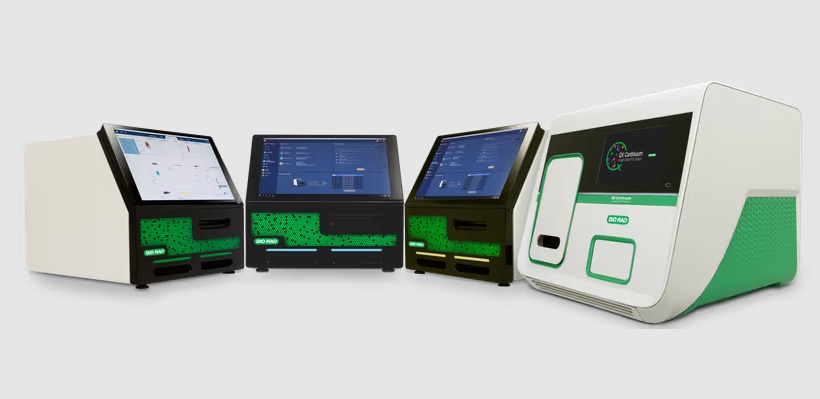
The company’s CrystalTag technology takes a different approach by separating target recognition from signal generation, enabling more flexible assay design and higher-level multiplexing. On the QX700 platform, CrystalTag supports detection of up to 21 targets in a single reaction well. Bio-Rad plans to make 13 oncology-focused ddPLEX CrystalTag ddPCR Assays and CrystalTag Reporters available soon, including solutions for ESR1 mutation, KRAS mutation, and HPV research.
All of the described ddPCR assays are for Research Use Only and are not intended for use in diagnostic procedures. Any clinical use or clinical claims by customers or researchers require appropriate in-house validation and compliance with applicable local regulations.
Bio-Rad plans to showcase the expanded portfolio at the 2026 Association for Molecular Pathology (AMP) Annual Meeting and the San Antonio Breast Cancer Symposium. Sessions will cover personalized, tumor-informed ddPCR assays for molecular residual disease (MRD) detection and monitoring, ESR1 mutation analysis in research samples, and analytical considerations including sensitivity, turnaround time, workflow simplicity, and cost compared with quantitative polymerase chain reaction (qPCR) and broader genomic profiling approaches.
“With this expanded menu of QX700 ddPCR assays and technologies, researchers can design more powerful multiplex assays and analyze biomarkers with highly sensitive, absolute quantification, all in scalable, streamlined workflows,” said Steve Kulisch, Vice President Product Management, Digital Biology Group, Bio-Rad Laboratories. “Together with our continued investment in CrystalTag technology, this launch underscores Bio-Rad’s commitment to advancing oncology research.”